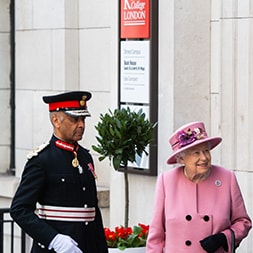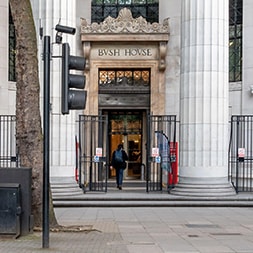
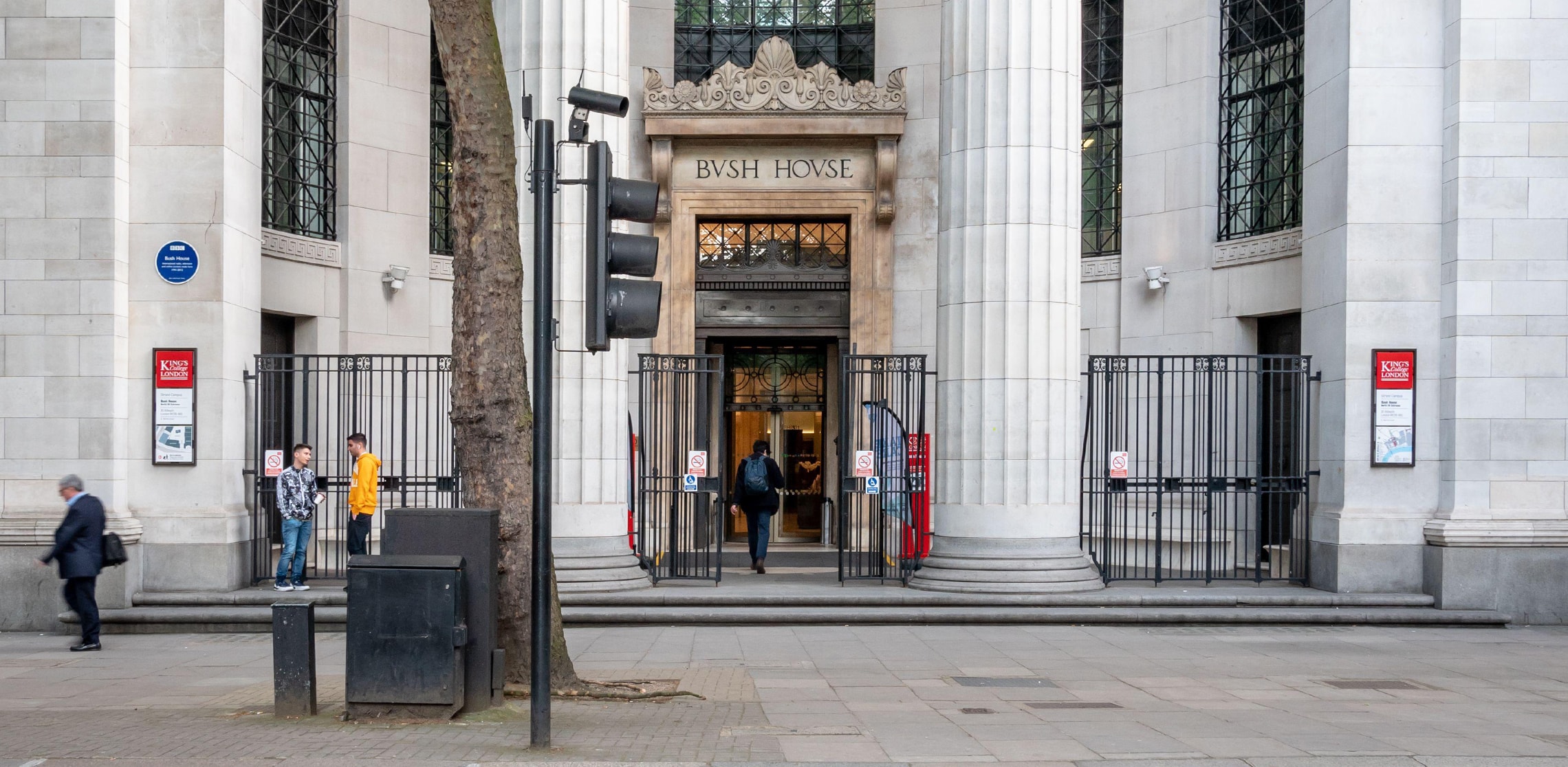
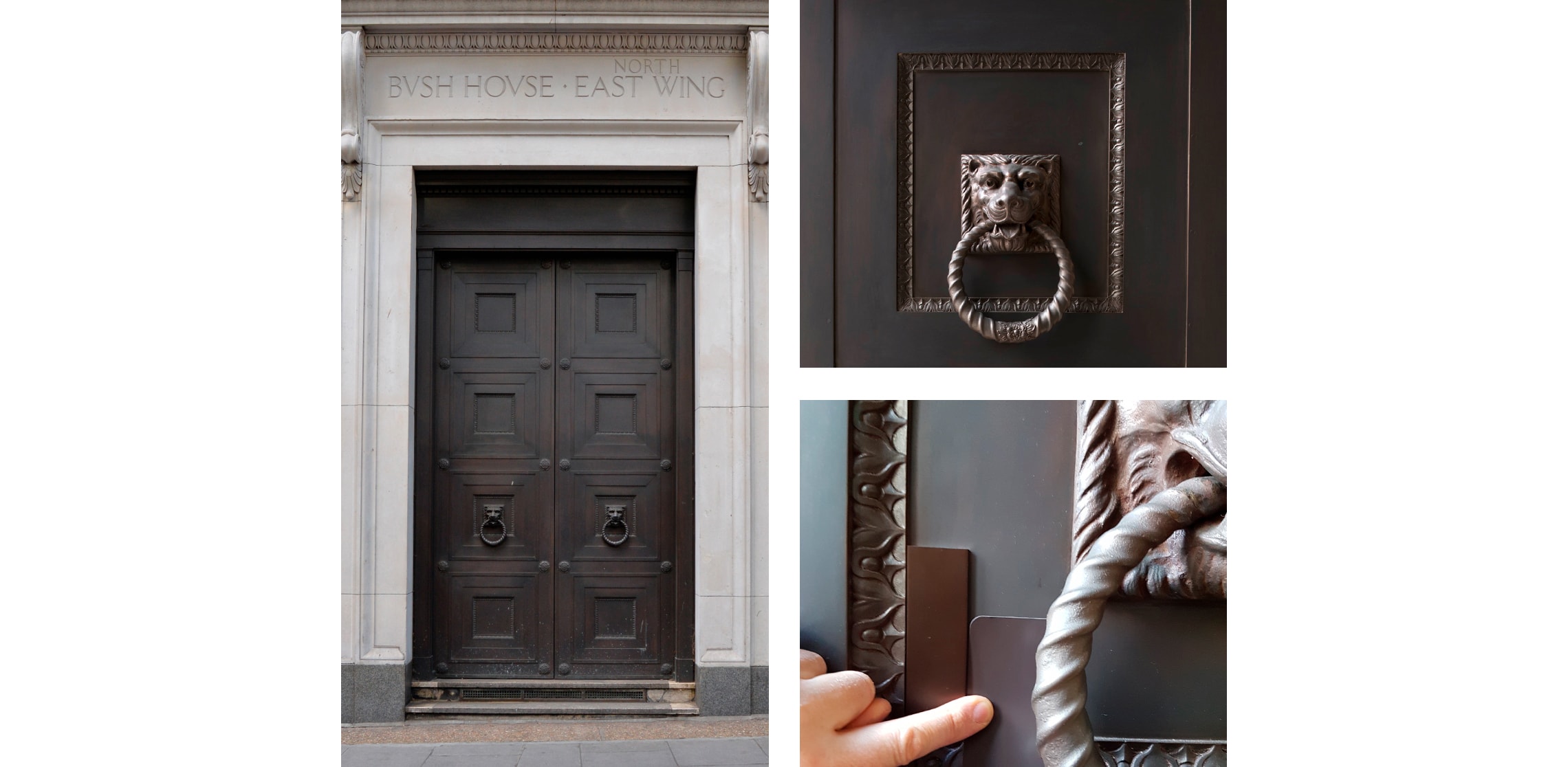
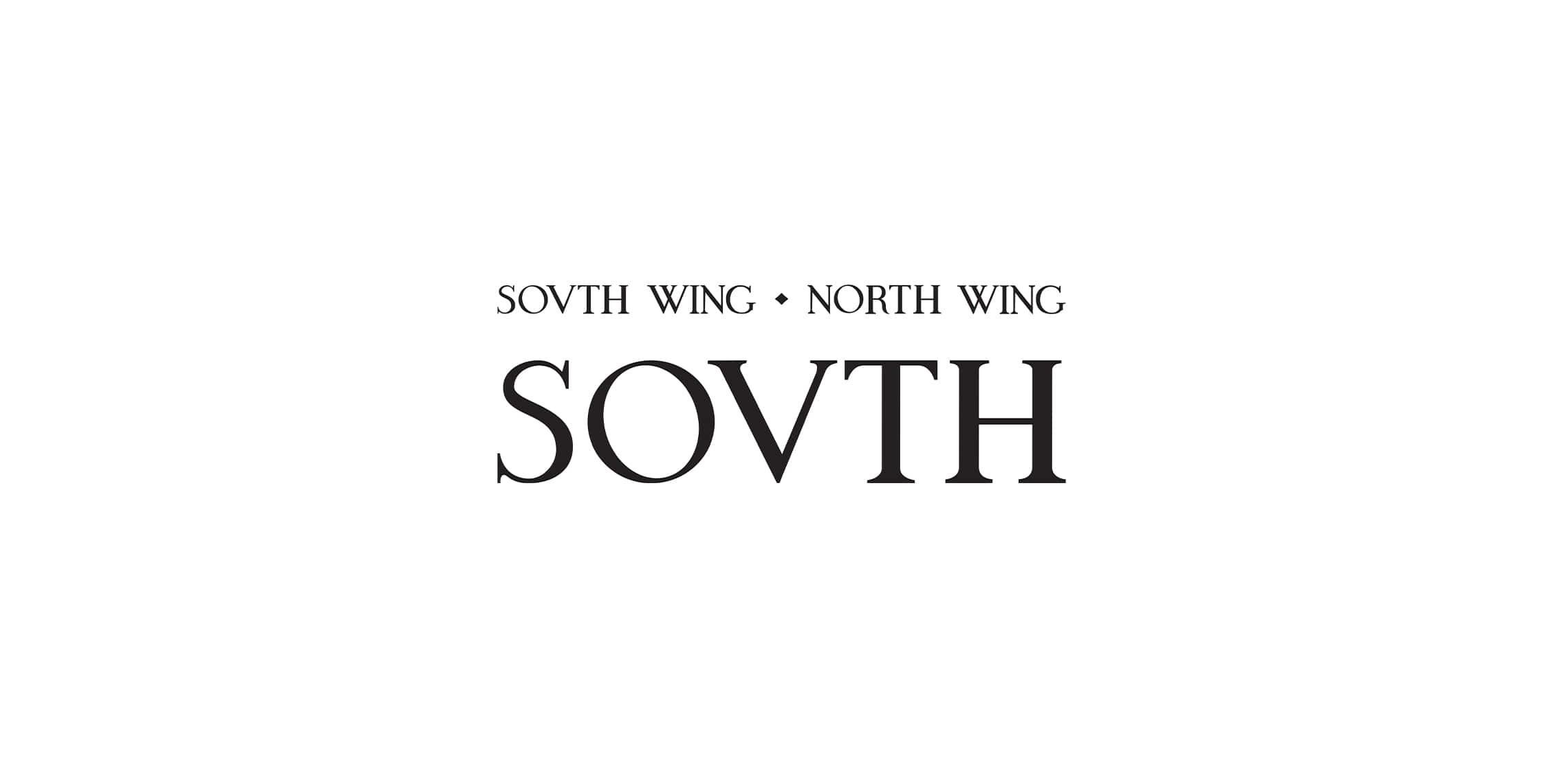
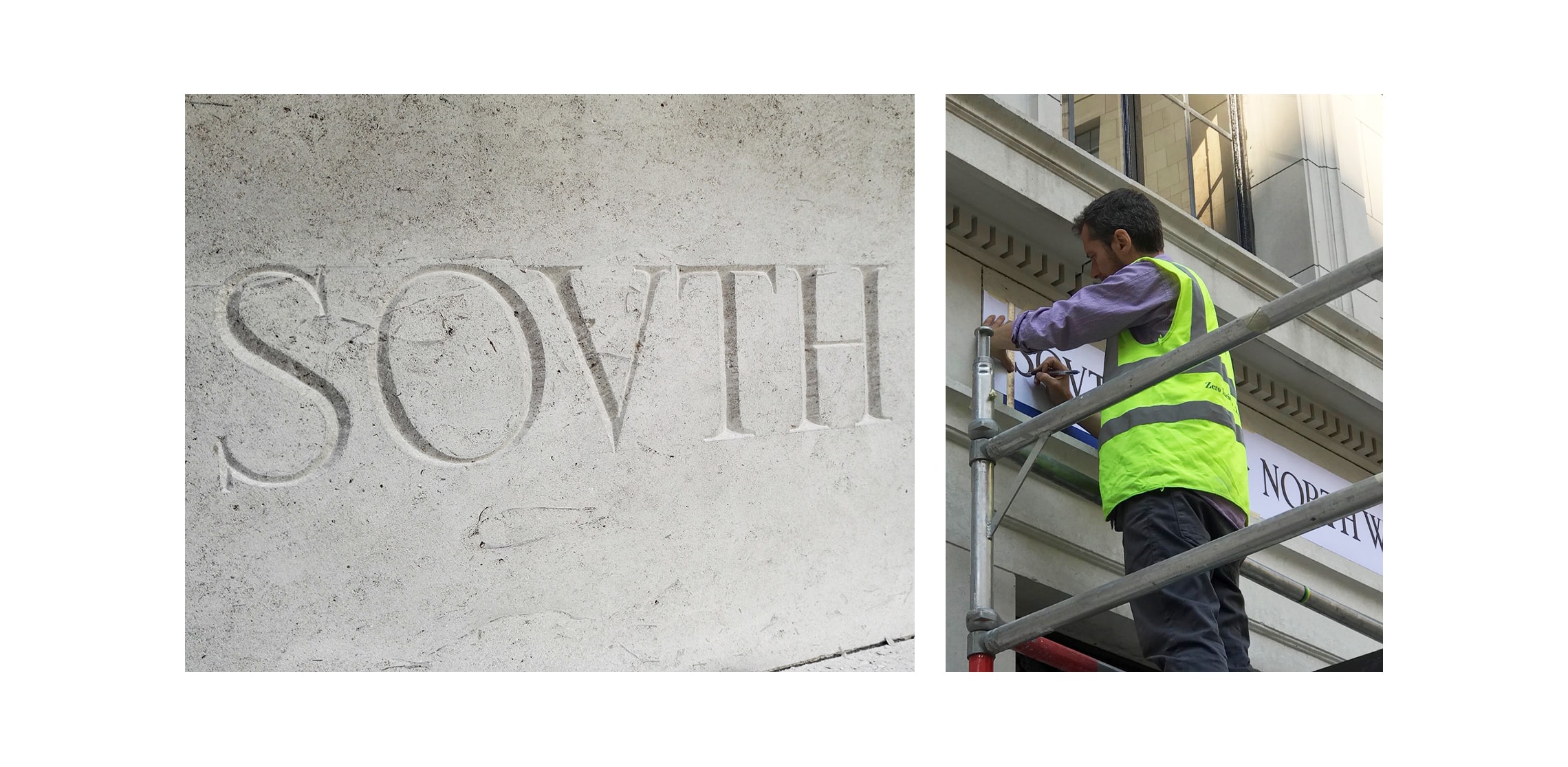
Bush House, sitting on Aldwych, feels instinctively British – not least because it was home to the BBC for seventy years. The World Service gave it a global voice, broadcasting in more than forty languages, always anchored by the refrain: “from Bush House.” Yet the name comes not from the BBC, but from Irving T. Bush, the New York businessman who commissioned the building as an international trade centre. Completed in 1935 by American architects Helmle & Corbett, it brought a distinctly American confidence to central London – a piece of “big business classicism” reputedly the most expensive building in the world at the time.
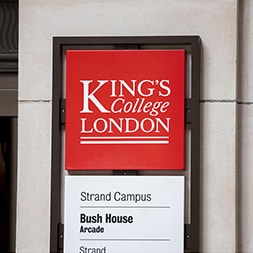
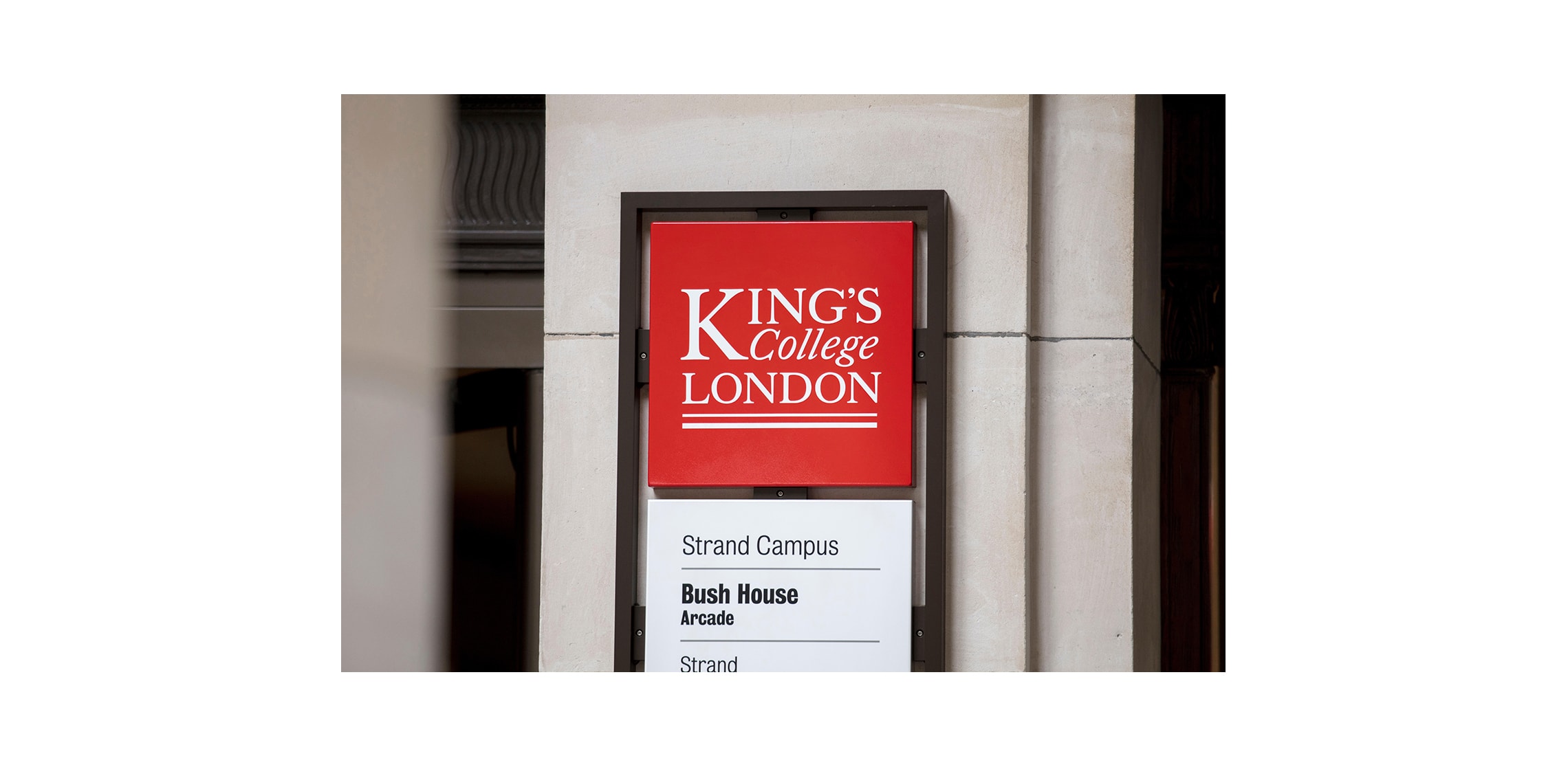
When the BBC left in 2012, King’s College London began opening Bush House’s four wings as part of its expansion. The shift from broadcaster to academic institution introduced thousands of students and staff who needed to navigate the building easily, often under time pressure between lectures.
The challenge was complicated by the building’s Grade II listing. Any wayfinding had to be entirely self-supporting, with no fixings into the historic fabric, while also working within interiors whose scale and cool limestone surfaces can feel imposing and disorienting.
As we often do, we looked to the building itself for cues, tracing its origins back to Jazz Age America. This led us to Charles and Ray Eames’ House of Cards – a system of simple slotted rectangles capable of forming multiple structures. It offered both a conceptual and practical reference: modular, adaptable and architectural in its own right.
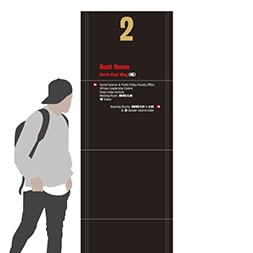
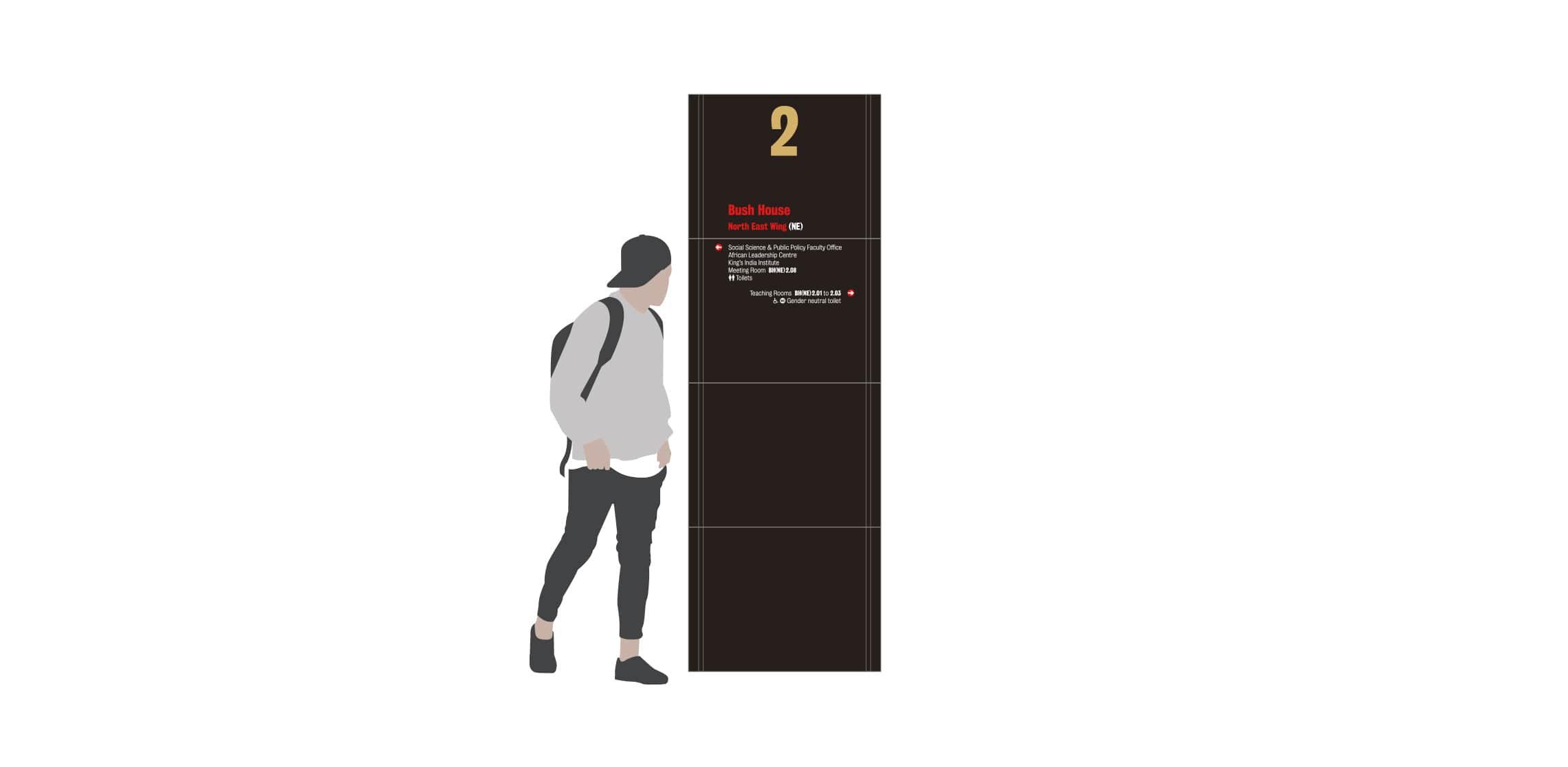
From this we developed a series of stacked totems positioned within the central cores of the wings. Standing independently, they respect the listed building while creating clear points of orientation. On arrival, they provide immediate direction towards teaching rooms and lecture theatres, allowing decisions to be made quickly and movement to continue uninterrupted.
There is also a deliberate shift depending on the direction of travel. Entering the building, the information is immediate and functional. Leaving it, the totems reveal images of notable King’s alumni, introducing a quieter moment of reflection and expanding the experience beyond simple navigation.
Visually, the totems restore something the building itself has lost over time. Classical architecture was never intended to appear as monochrome as we often encounter it today; colour played an important role in how it was read. Against the restrained limestone interior, the totems reintroduce contrast and legibility, standing out clearly without overwhelming the architecture.
What began as a solution for Bush House was later extended across King’s College London’s wider campus, carrying the same principles throughout: clarity without intrusion, structure without rigidity, and an understanding that movement through a building depends on how quickly people can make sense of where they are – and how confidently they can keep going.