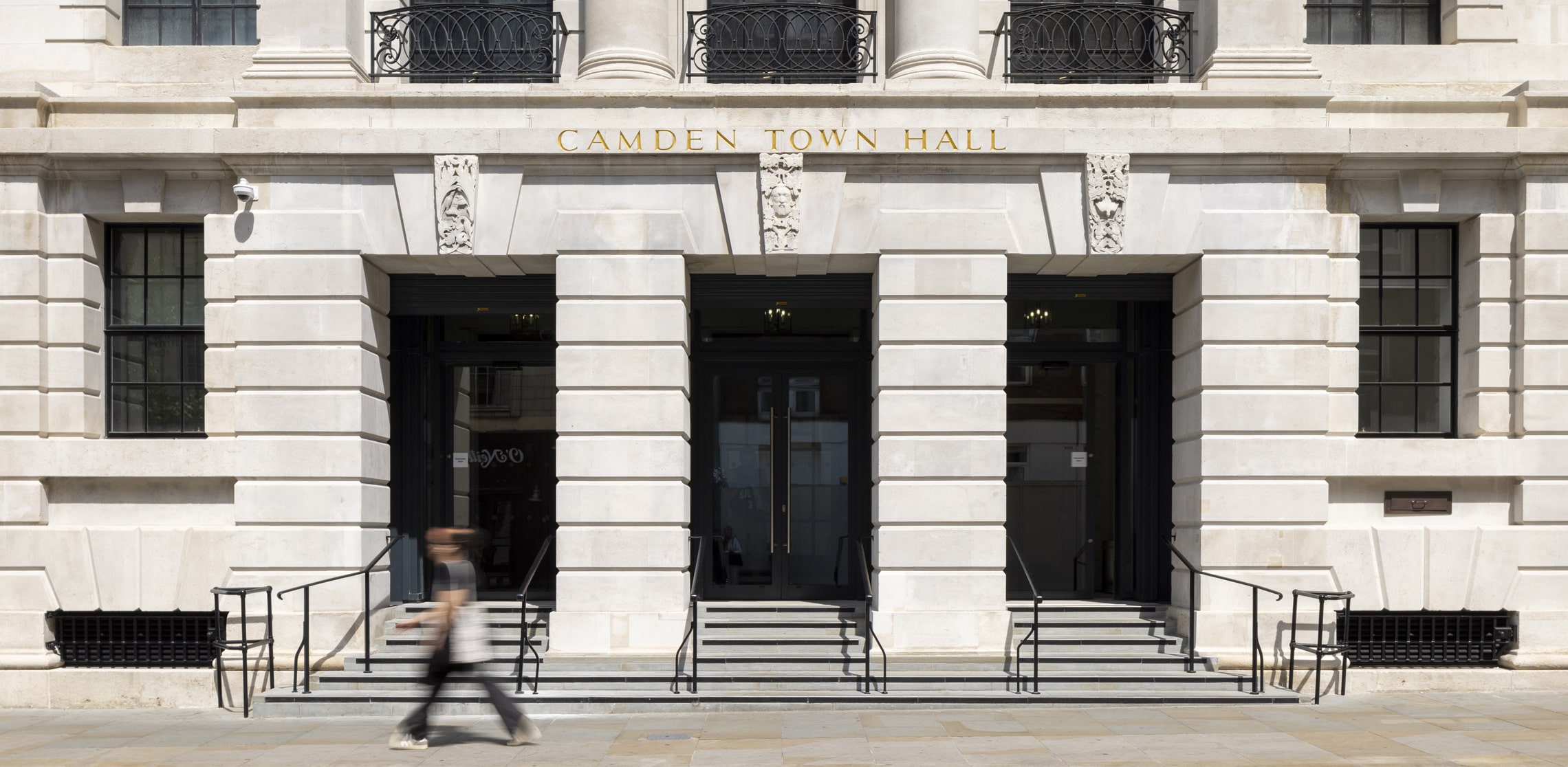
Following our work with Camden Council on the award-winning 5 St Pancras Square, we were pleased to collaborate again on nearby Camden Town Hall.
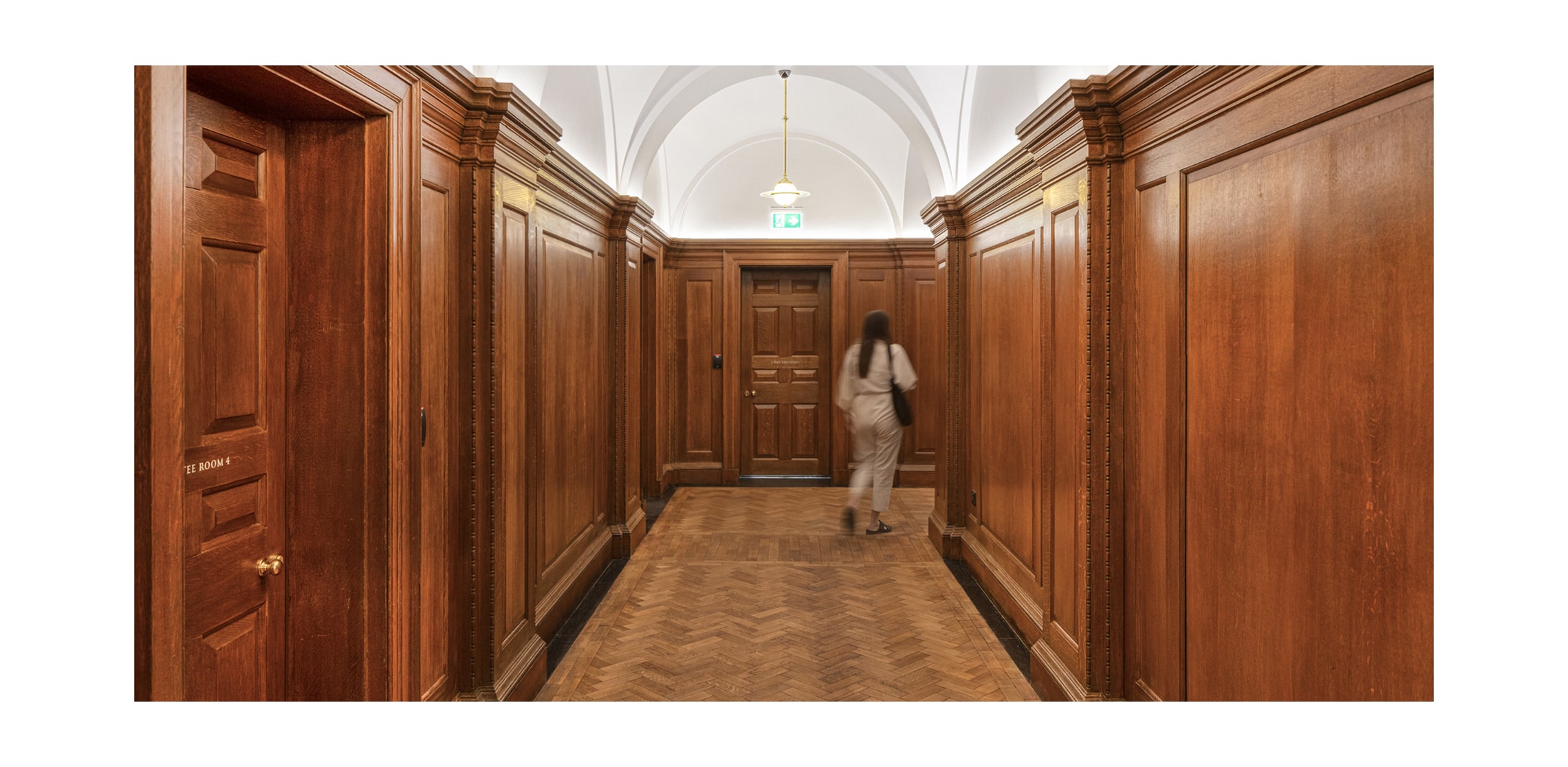
Completed in 1937, Camden Town Hall stands as a confident expression of civic pride. A grand Neoclassical building, it is defined by Corinthian columns, Portland stone, symmetry and a sense of order that gives it enduring presence. It was conceived as a statement. It remains one – and still doesn’t need to raise its voice.
Camden Council commissioned a programme of refurbishment and retrofit to improve energy performance and carefully repurpose parts of the building for contemporary use.
Its civic role continues at its core. The Council Chamber and Committee Rooms remain the centre of local government, while the wedding and civil partnership suites hold their longstanding place in the lives of local people. Alongside this, new business and tenanted office spaces have been introduced, together with a privately operated events and hospitality venue – ensuring the building is as active as it is dignified.
Our task was to bring clarity to navigation for a wide range of users, while remaining sensitive to the heritage refurbishment led by Purcell.
With several entrances aligned to different functions, we studied how people would move through the building to develop a wayfinding approach that delivers clarity with minimal intervention.
This is where our Time Agile Wayfinding™ approach comes into play – considering not just where people go, but how those journeys unfold. Because navigating a civic building is not a single, steady act; it’s a series of moments.
Times to decide quickly, times to be reassured, and occasional pauses where the building itself deserves attention.
Our design cue came from the windows. While the architecture is firmly Neoclassical, the fenestration introduces a more Modernist note: slender, black-painted steel frames with an Art Deco character – precise, elegant, and quietly confident.
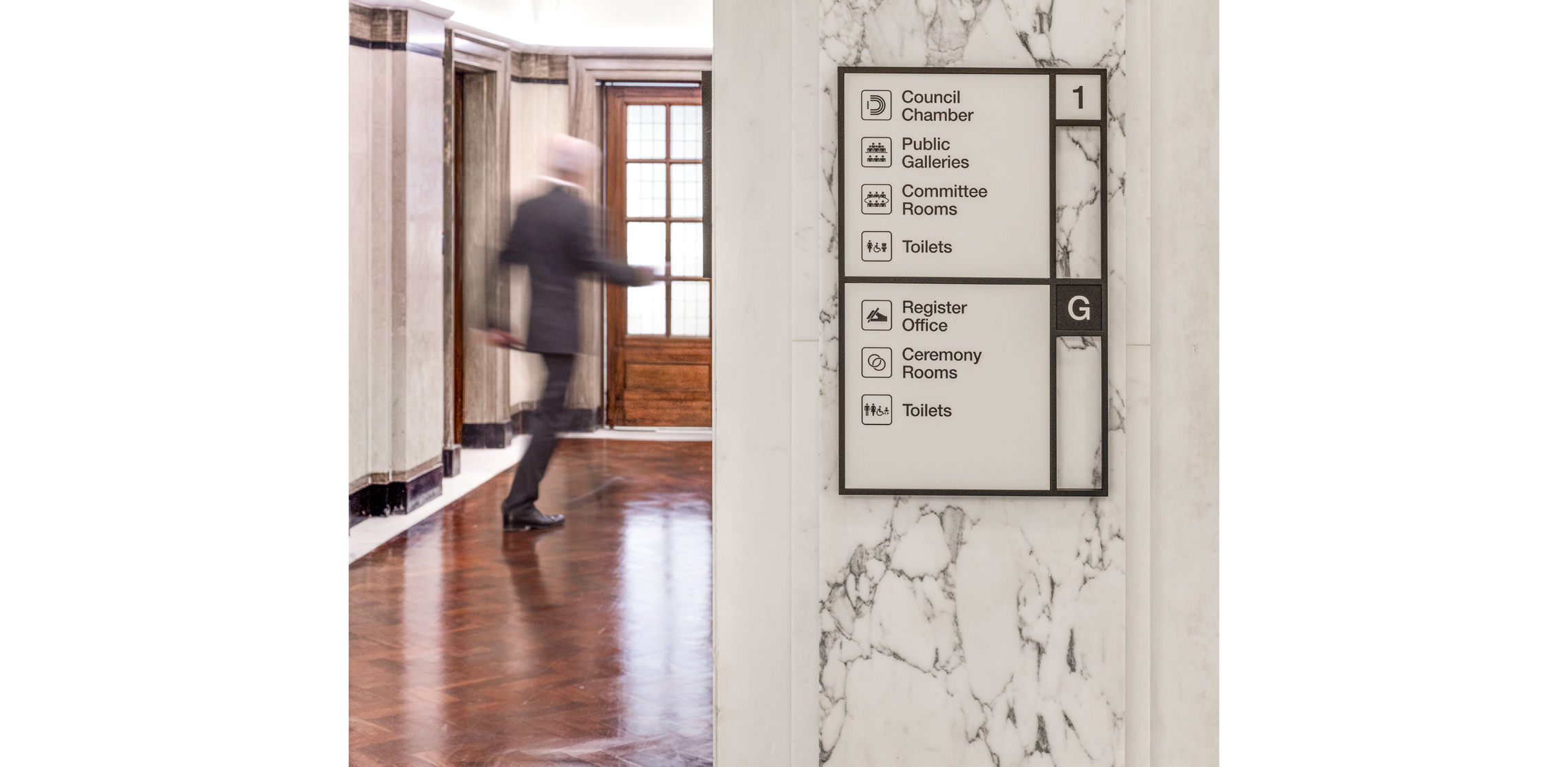
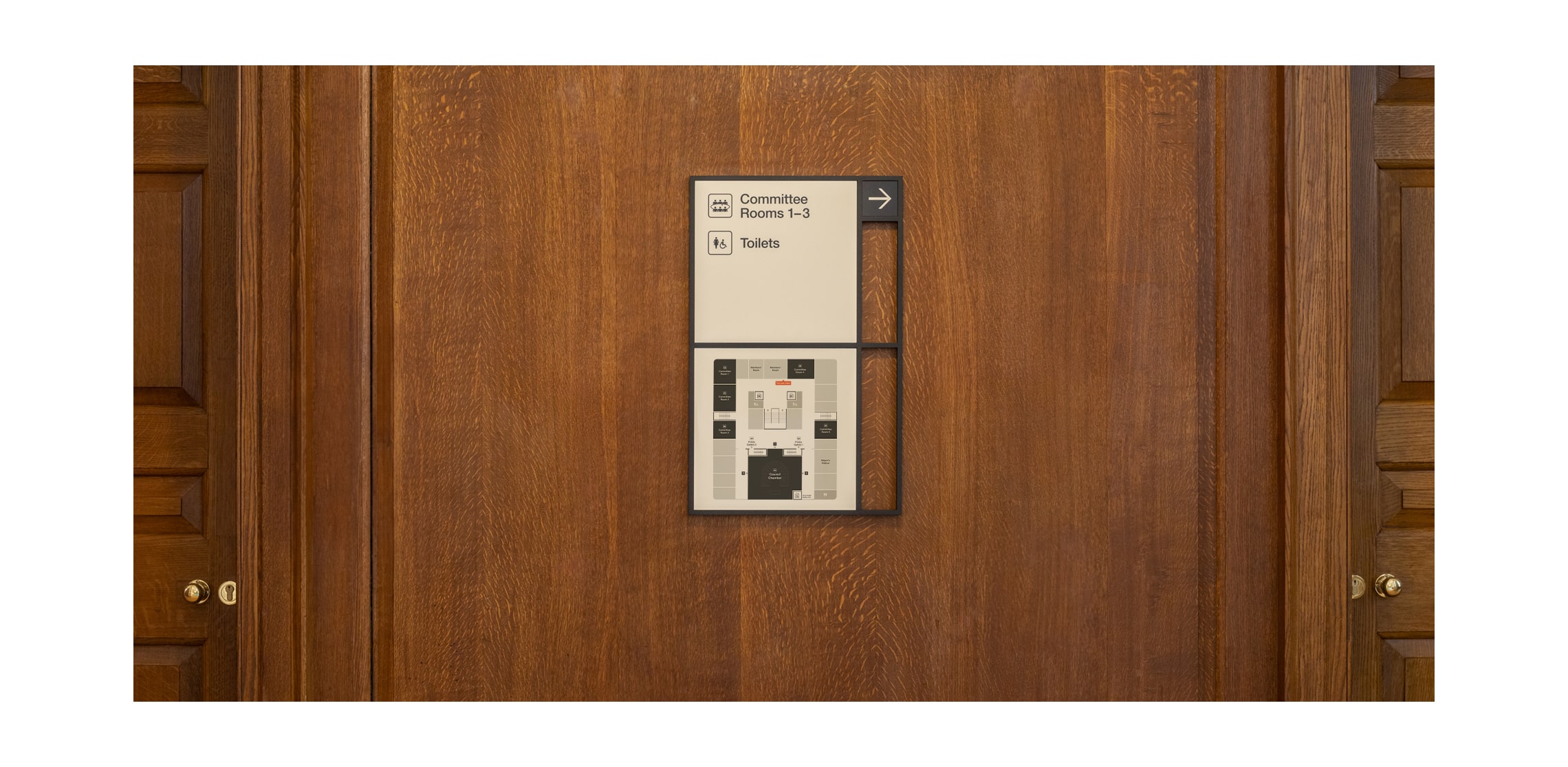
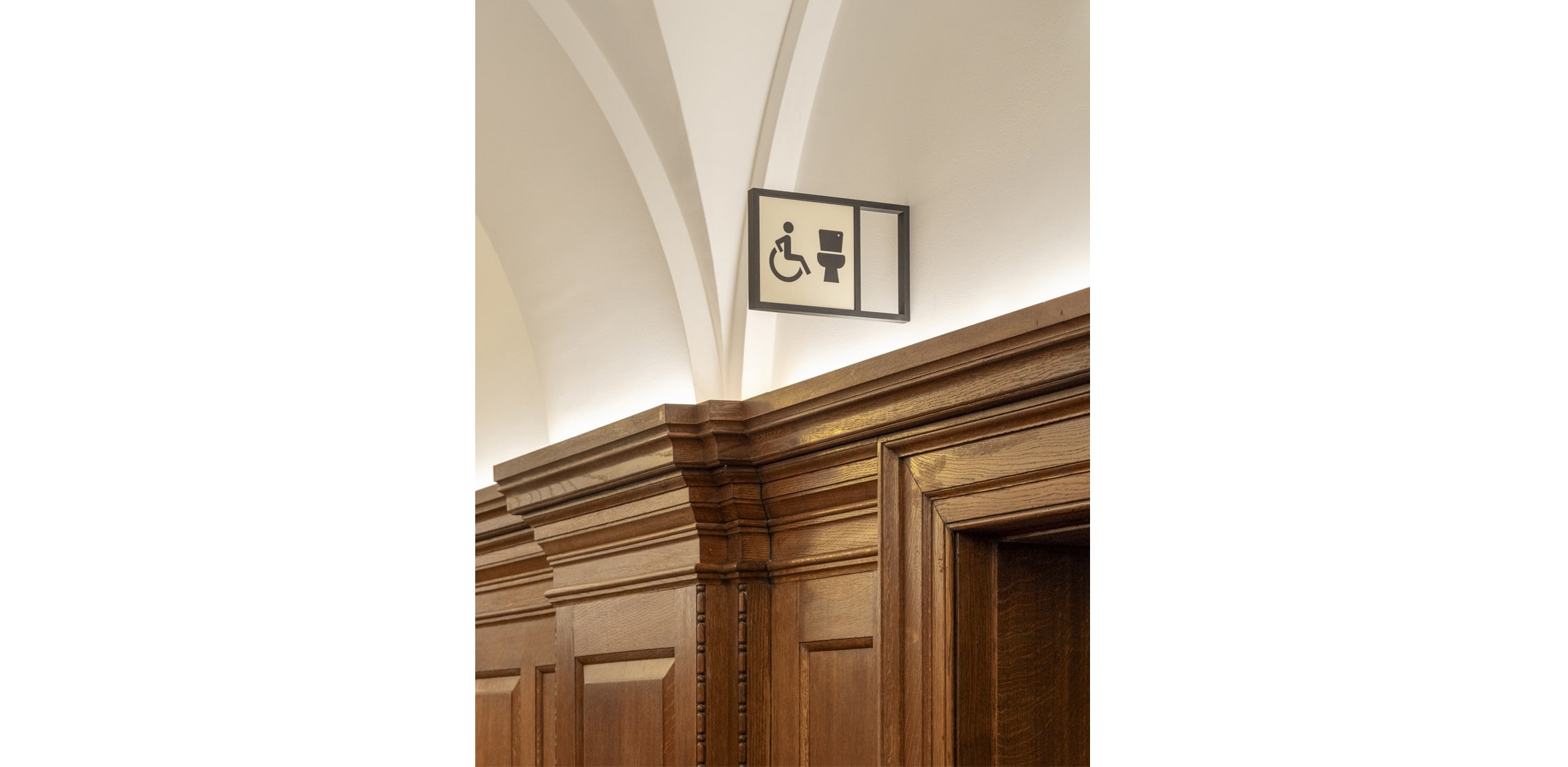
This intersection of influences led us to the linear abstraction of Mondrian. From this, we developed a graphic grid used for floor directories and directional information at key thresholds. Sections of the grid are left open, allowing the building’s materials to remain visible – Carrara marble at ground level and wood panelling above. It brings clarity at the moments it is needed, while allowing the architecture to carry the rest.
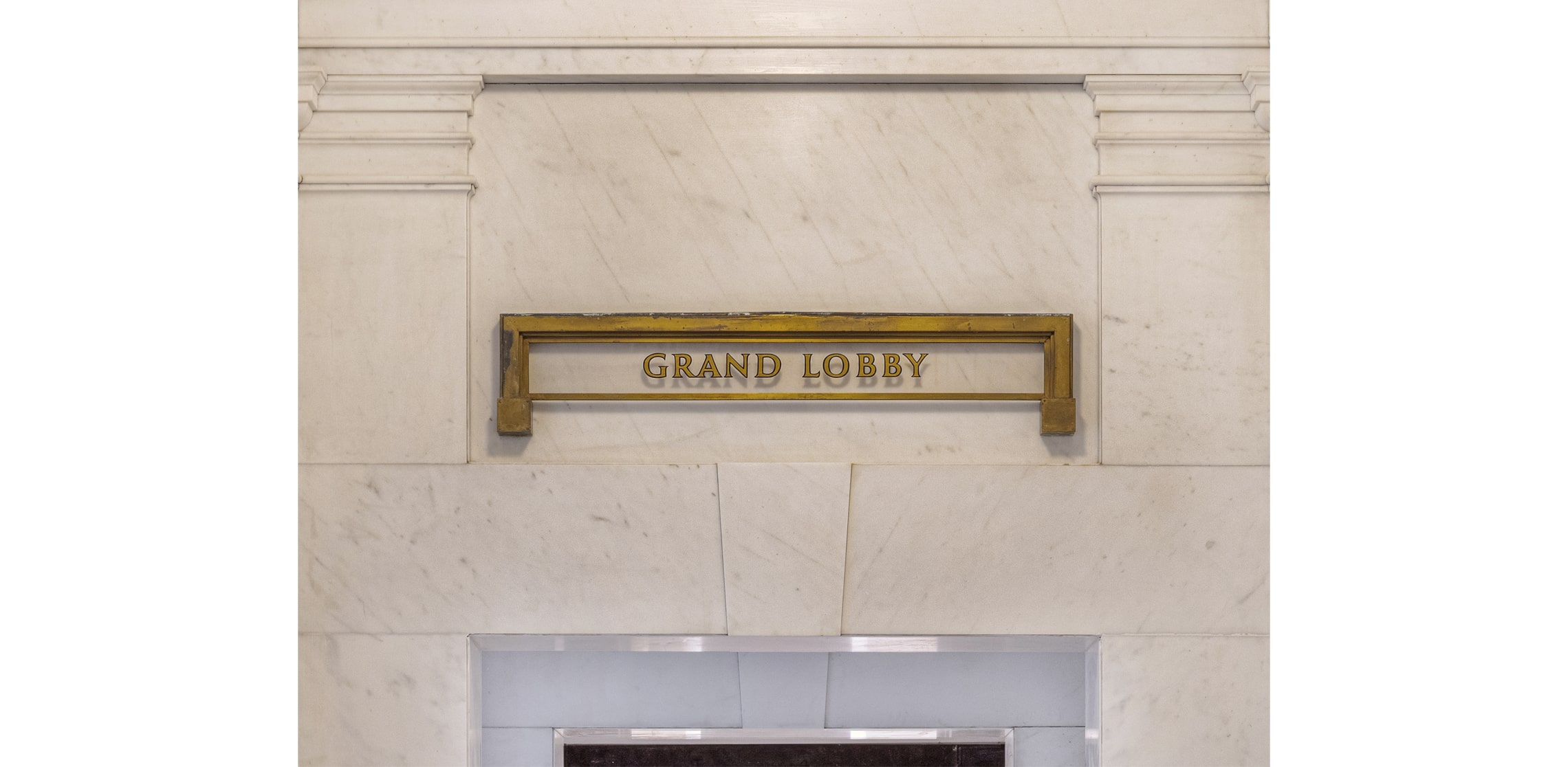
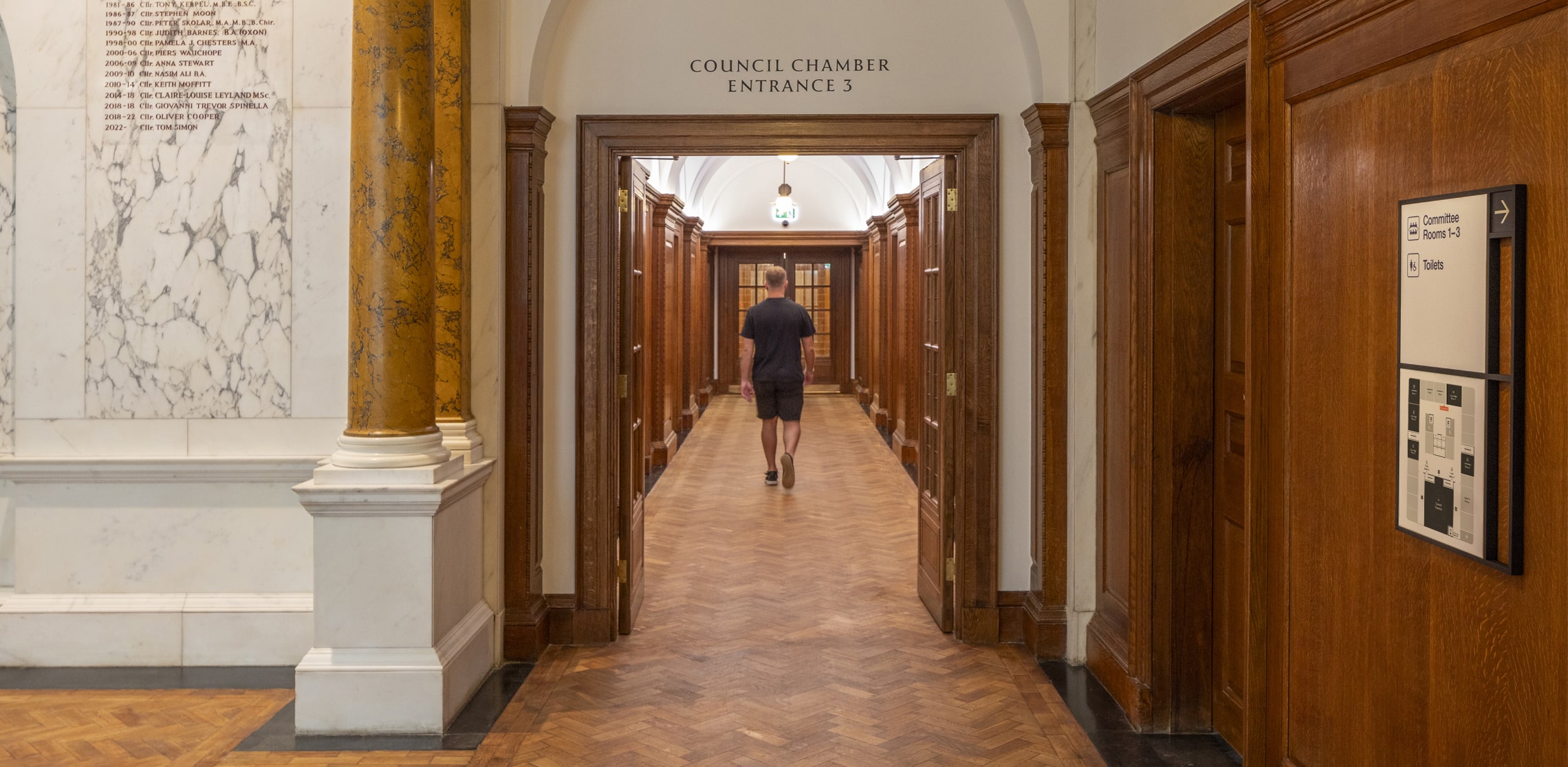
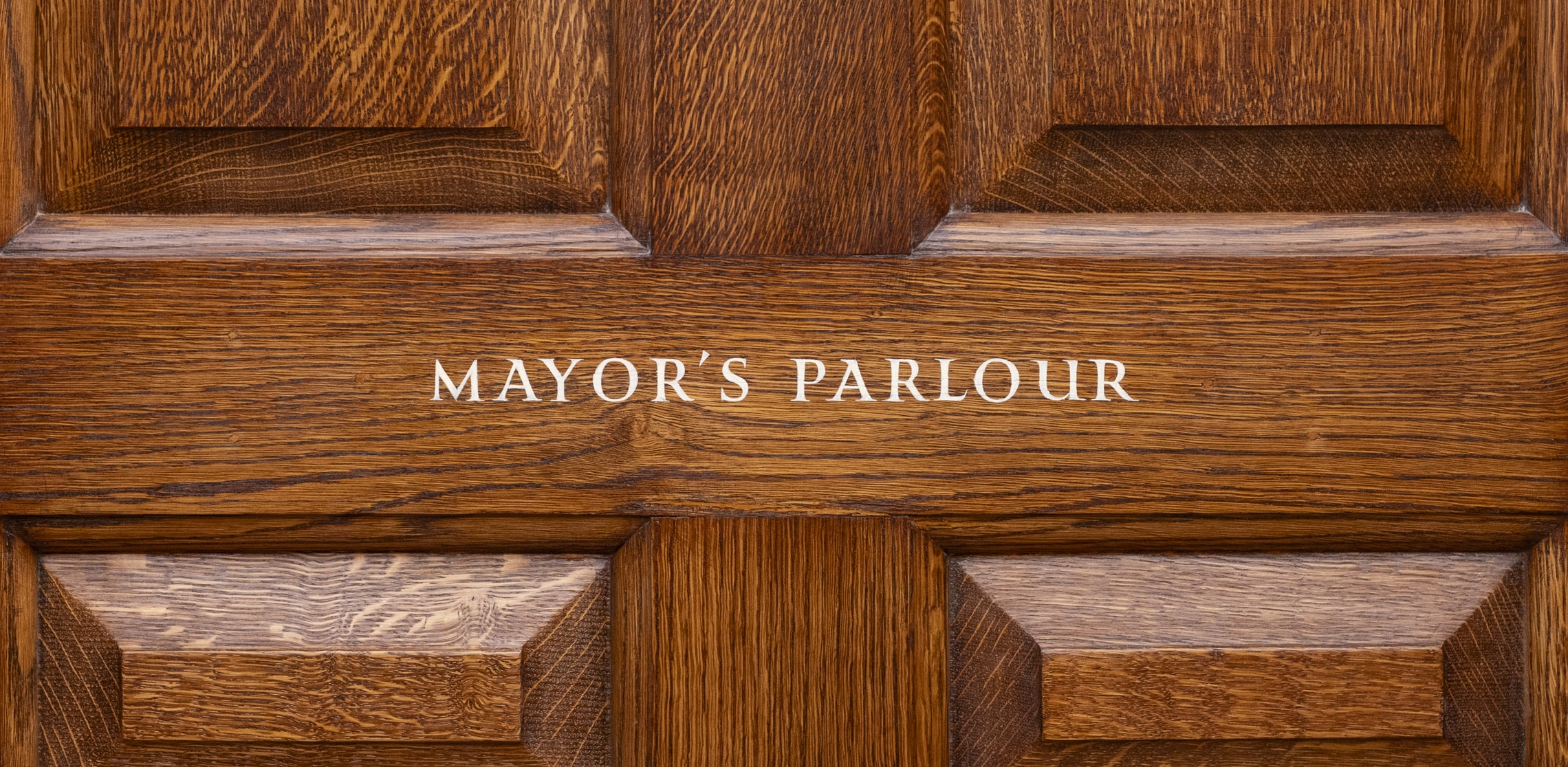
Complementing this framework are what we termed ‘Flourishes’: signwritten and stone-carved elements that mark key destinations such as the Wedding Lobby and Council Chamber, while also restoring benefactor and accreditation boards. These moments are less about direction and more about presence – points where people naturally slow, look, and take in their surroundings.
Together, the approach balances precision with restraint: guiding movement, shaping experience, and allowing the building to be encountered at its own pace.