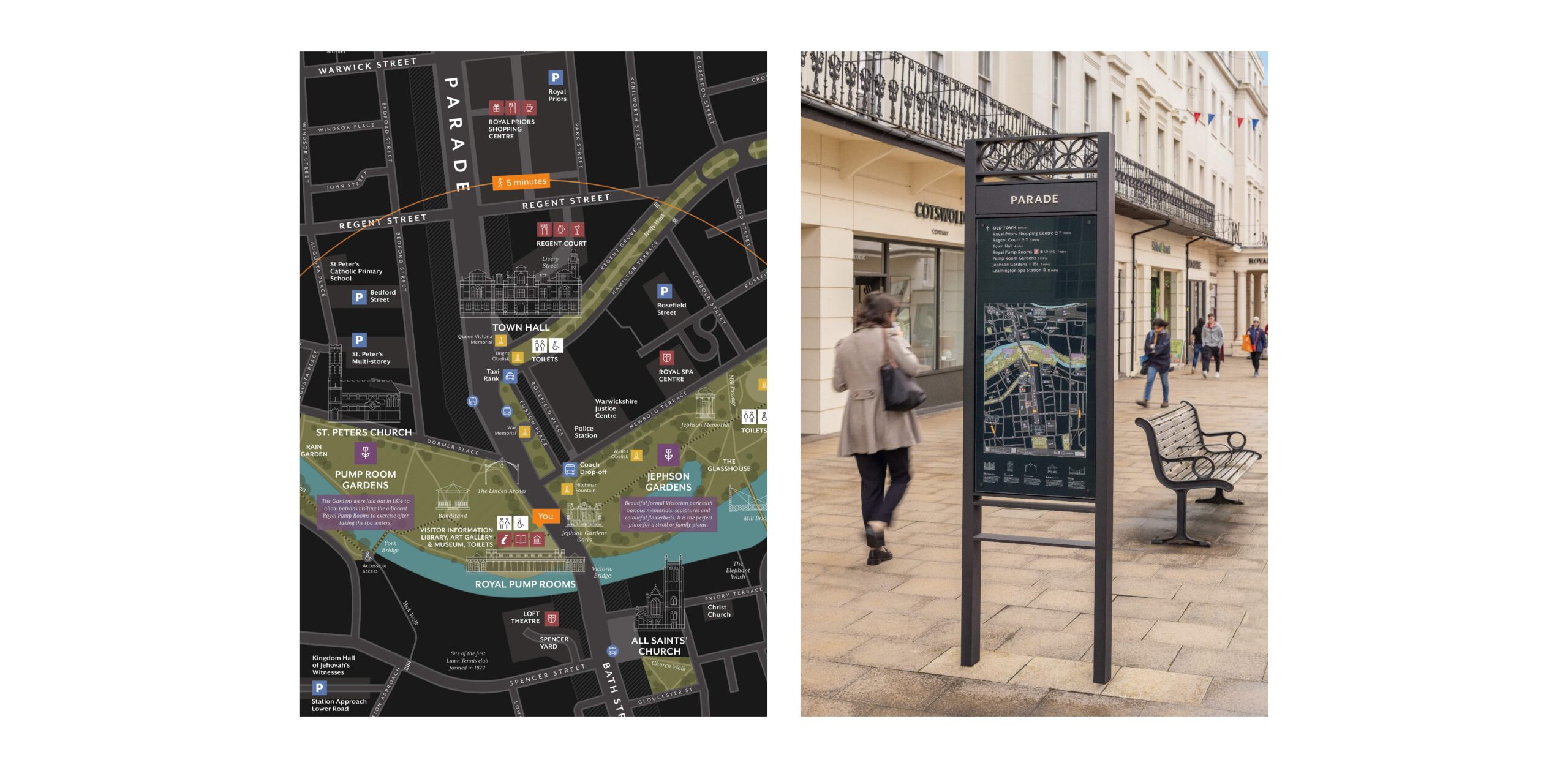
Warwick District Council asked us to rethink how people find their way around Royal Leamington Spa – not just where they go, but how they experience the town as they move through it. Because wayfinding isn’t just directional; it shapes how long people pause, linger, notice.
Leamington Spa was founded for Regency-era health seekers and socialites – a place built for strolling, seeing, being seen. That legacy still sits in its wide promenades, generous parks, and finely detailed architecture. But over time, the town’s signage had drifted into something more accidental: inconsistent, generic and easy to ignore. The kind of system people pass through rather than engage with.
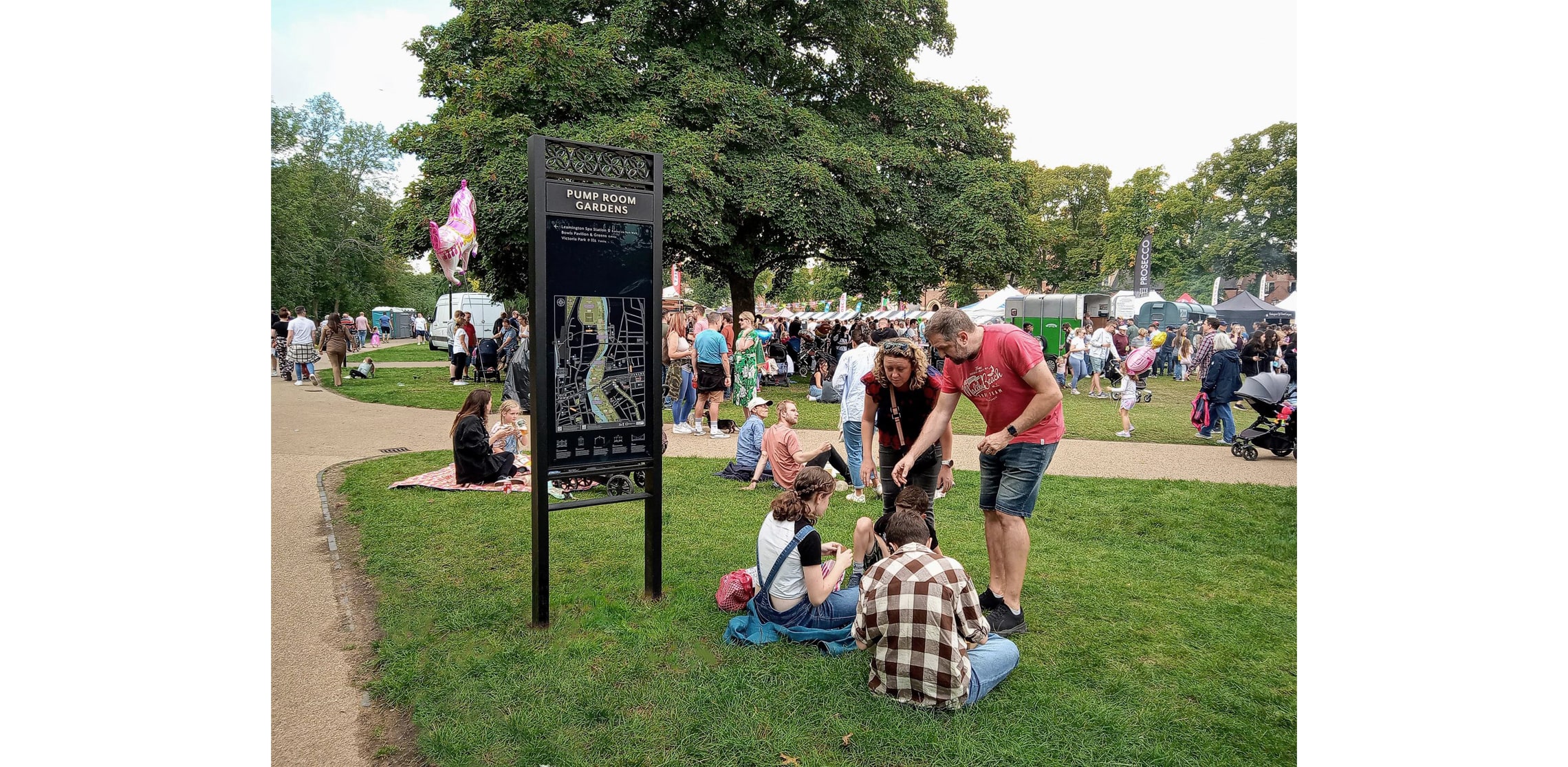
Then came the 2022 Commonwealth Games Lawn Bowls and Para Lawn Bowls… With Victoria Park set to welcome 3,300 spectators, many visiting for the first time, the question sharpened: how do you help people move smoothly, while also inviting them to look up, slow down, and take something of the town with them?
Our analysis revealed two main routes: the north–south spine of The Parade, and the east–west sweep of parks and gardens tracing the River Leam. The challenge wasn’t just navigation between them, but encouraging the natural flow of a gentle weaving between retail, green space, and heritage.
Because along those routes are stories worth a pause; the Royal Pump Rooms; the Art Gallery, once a 19th-century bathhouse; the Elephant Wash, where circus animals were once bathed; even the site of the world’s first lawn tennis matches. Not things to rush past, but to dwell on, even if briefly with curiously.
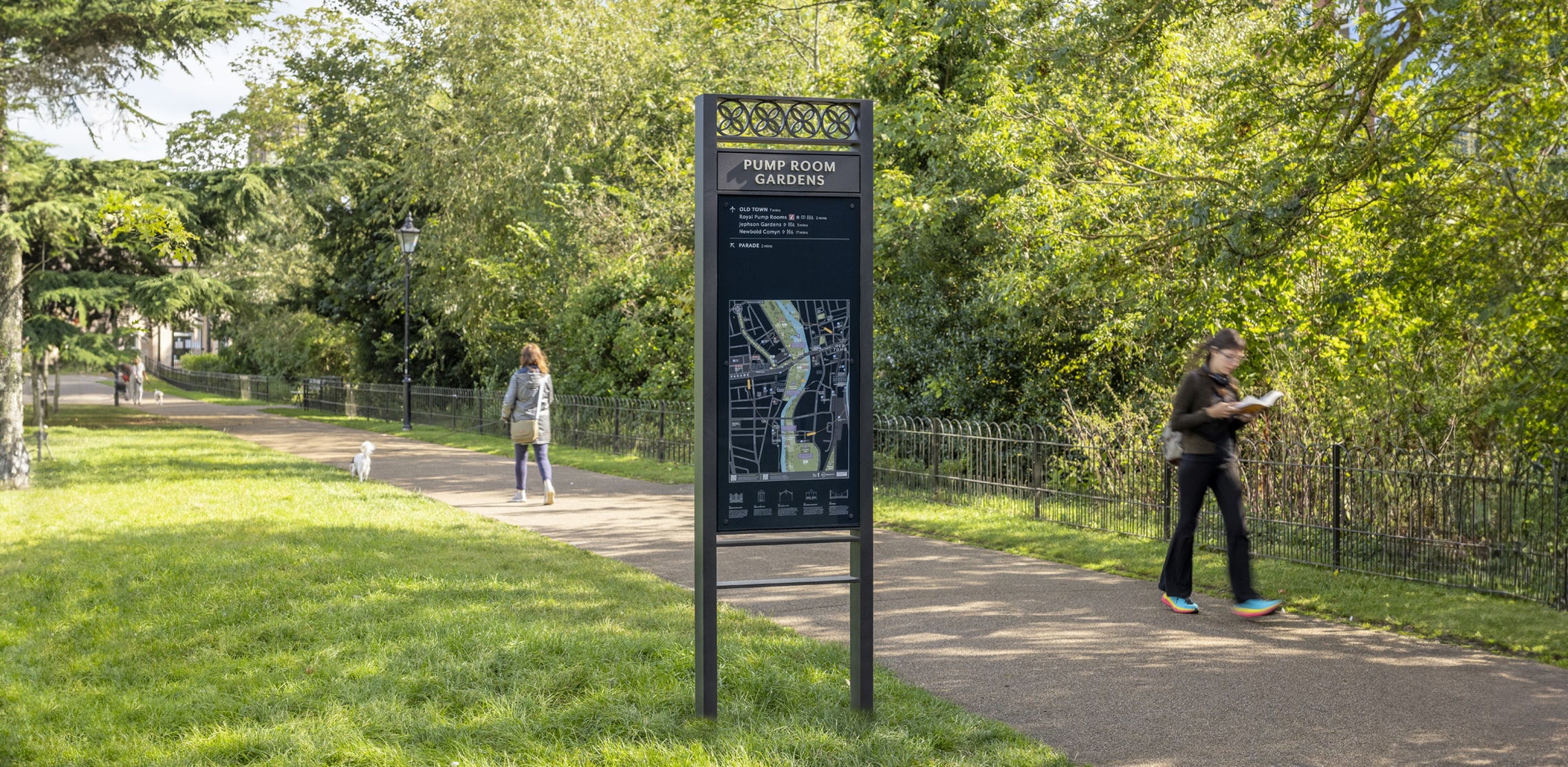
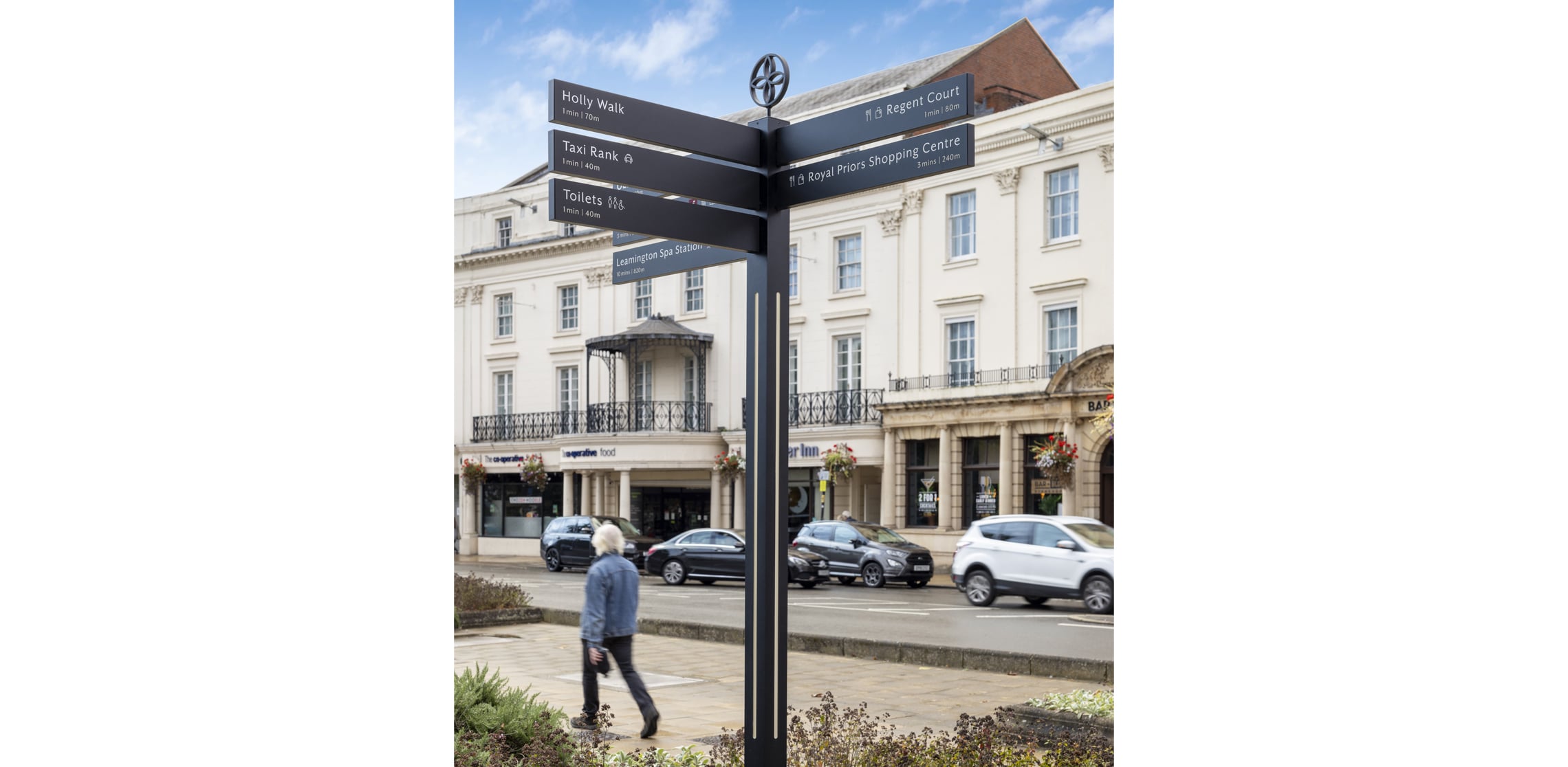
So we designed a system that works at different speeds. Clear directional information for those moving with purpose. And, for those with a little more time, layers of interpretation accessed via QR codes linking to heritage trails, events, and local narratives that reward a slower pace.
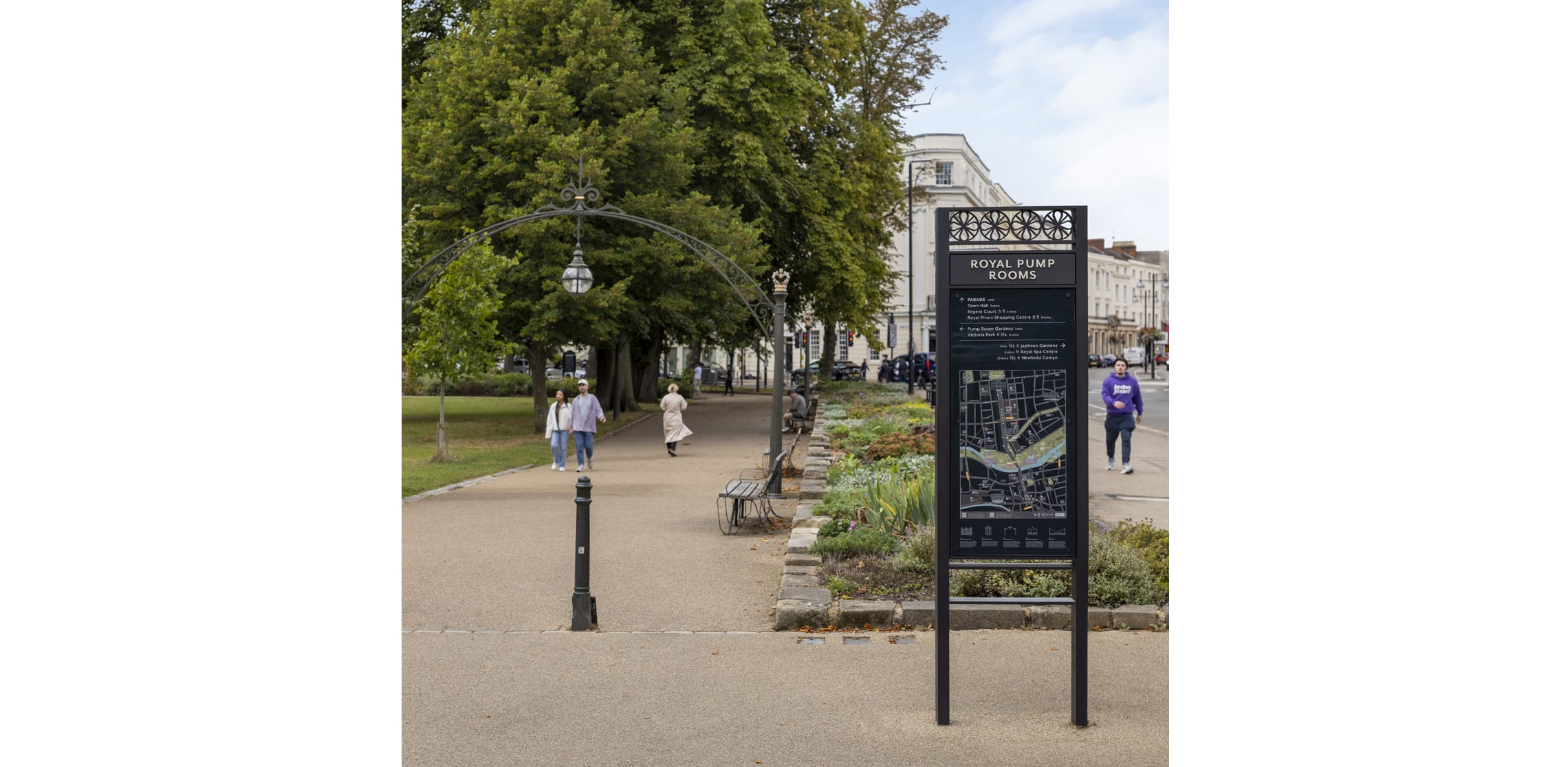
We introduced a network of primary and secondary information points, carefully positioned to guide movement while subtly encouraging exploration enabling a draw for people between The Parade and Old Town, and highlighting key entry points and destinations along the way.
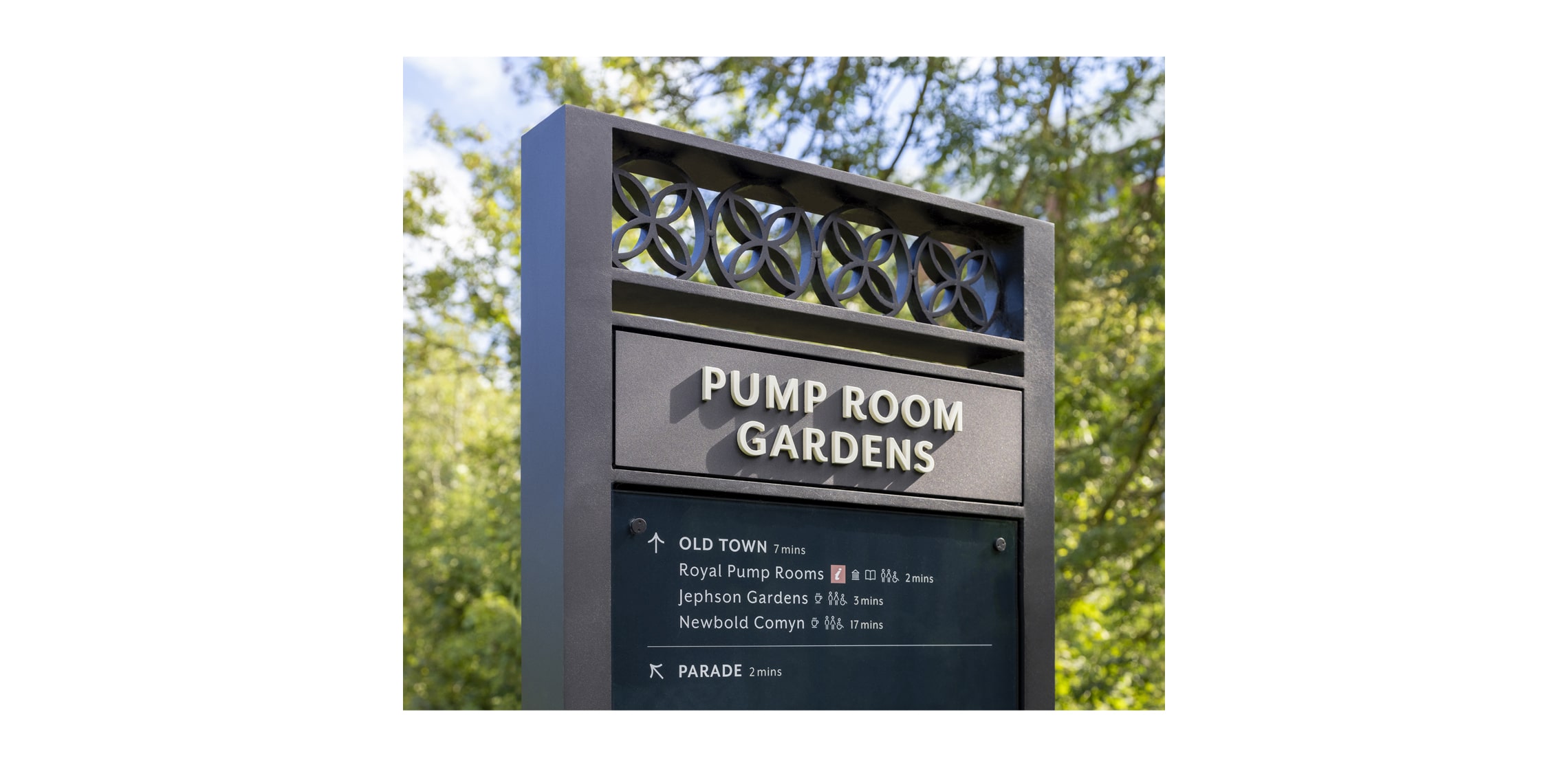
The unifying idea came from the town itself. Regency ironwork, those distinctive wrought-iron balustrades and balcony details, became the visual anchor. Elegant, recognisable, and rooted in place. Typography nods to historic architectural lettering, while the colour palette sits comfortably within the Conservation Area, never shouting for attention, but always present.
Throughout, we worked closely with conservation officers and a highly engaged local community. The result is a scheme that doesn’t impose itself on the town, but belongs to it.
A system that helps people find their way and, just as importantly, gives them reasons to slow down as they do.