



‘We shape our buildings; thereafter they shape us.’ Churchill was entirely right about this one. And nowhere does it apply more strongly than in education, where buildings shape not only movement, but how people learn, meet and think together.
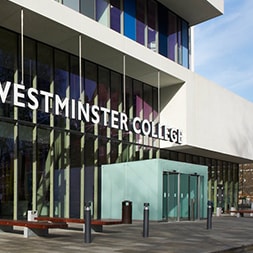
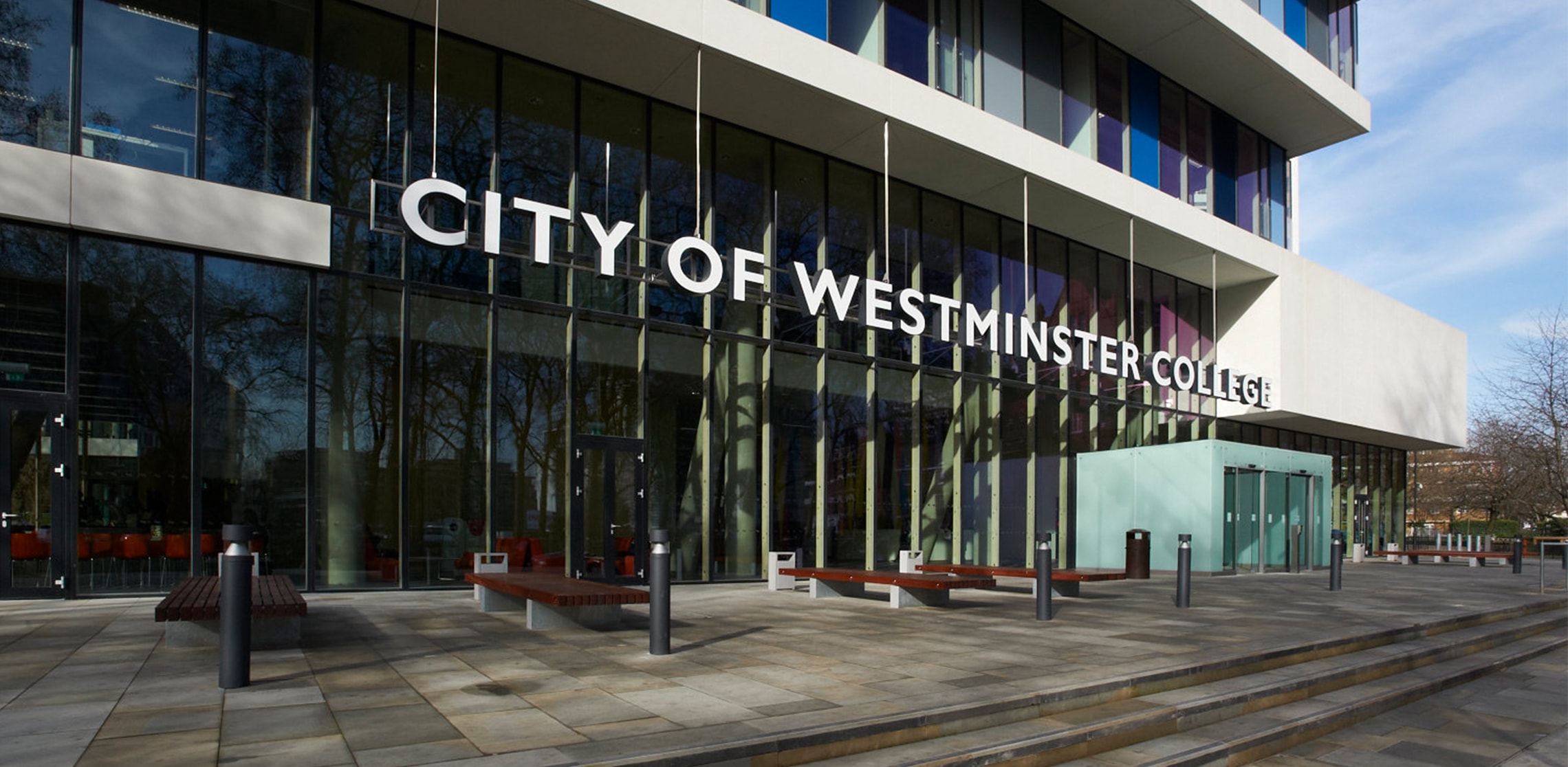
Paddington Green sits within one of London’s most diverse neighbourhoods. Before the new campus, City of Westminster College was spread across several specialist buildings – functional, but fragmented. The new 24,000m² campus brings everything together under one roof: engineering and automotive workshops, print and music studios, laboratories, lecture theatres, sports halls and flexible study spaces, used daily by around 4,000 students. The building also extends beyond the institution itself, incorporating exhibition spaces, a theatre, café and outdoor terrace as part of the wider regeneration of Paddington Basin.
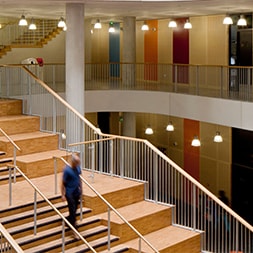
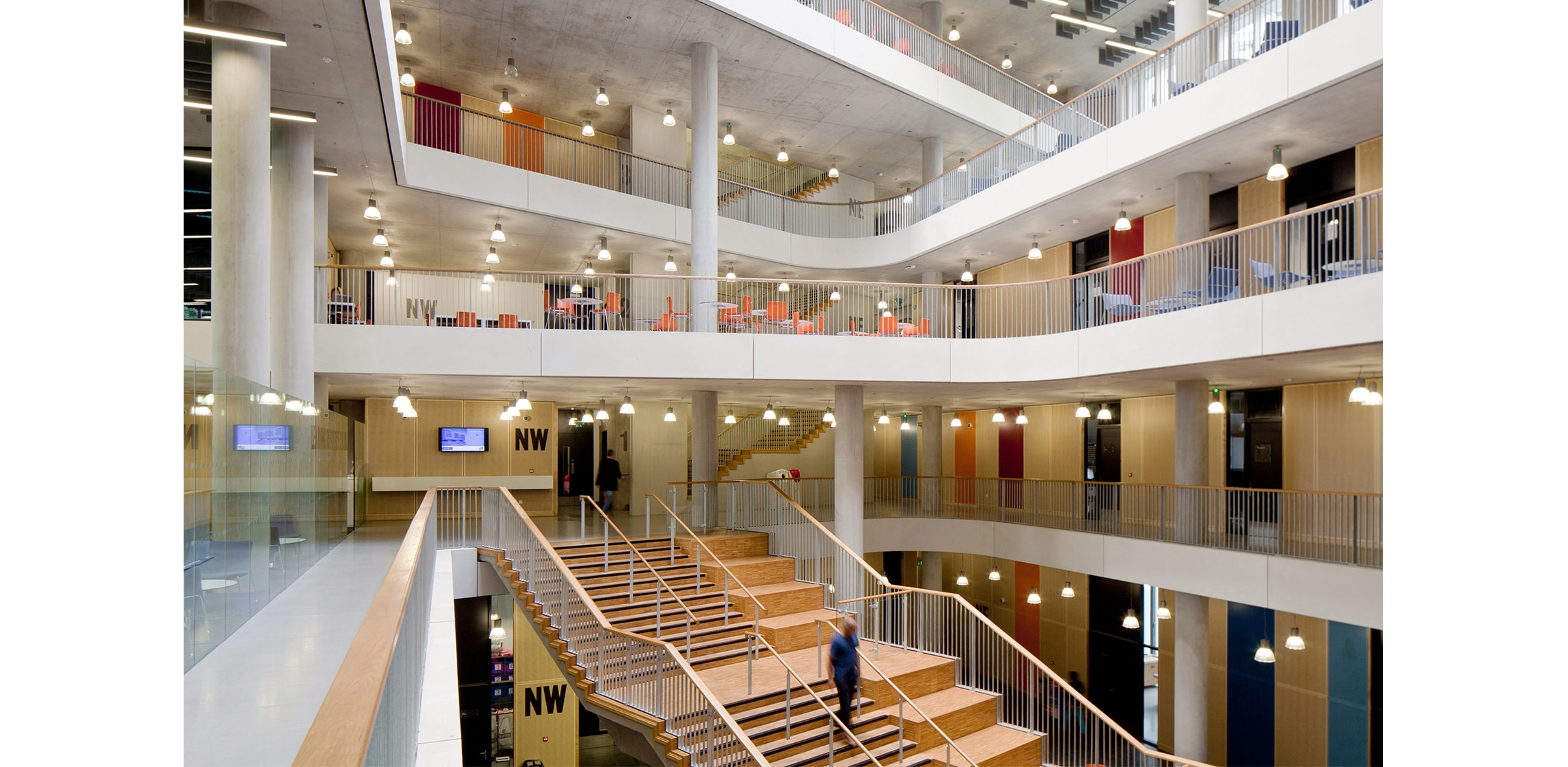
Designed by Schmidt Hammer Lassen, the architecture is organised around a vast central atrium, with seven storeys wrapping around it in shifting asymmetric forms. Concrete and timber create a distinctly Scandinavian clarity – calm and ordered, even when the geometry becomes complex.
Our brief was to make this scale intelligible – and to make it feel unmistakably London.
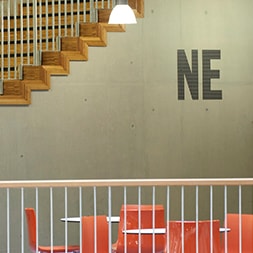
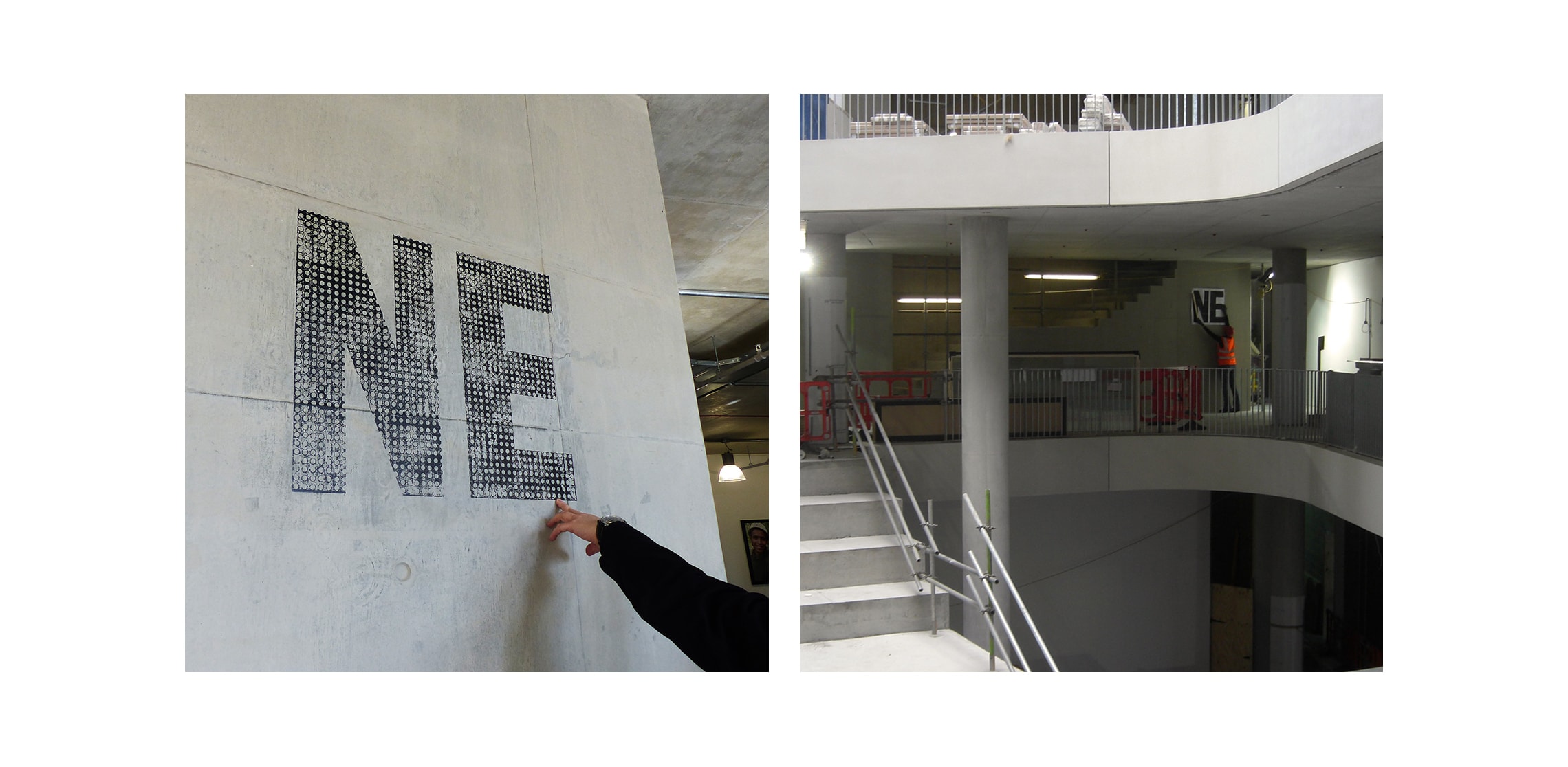
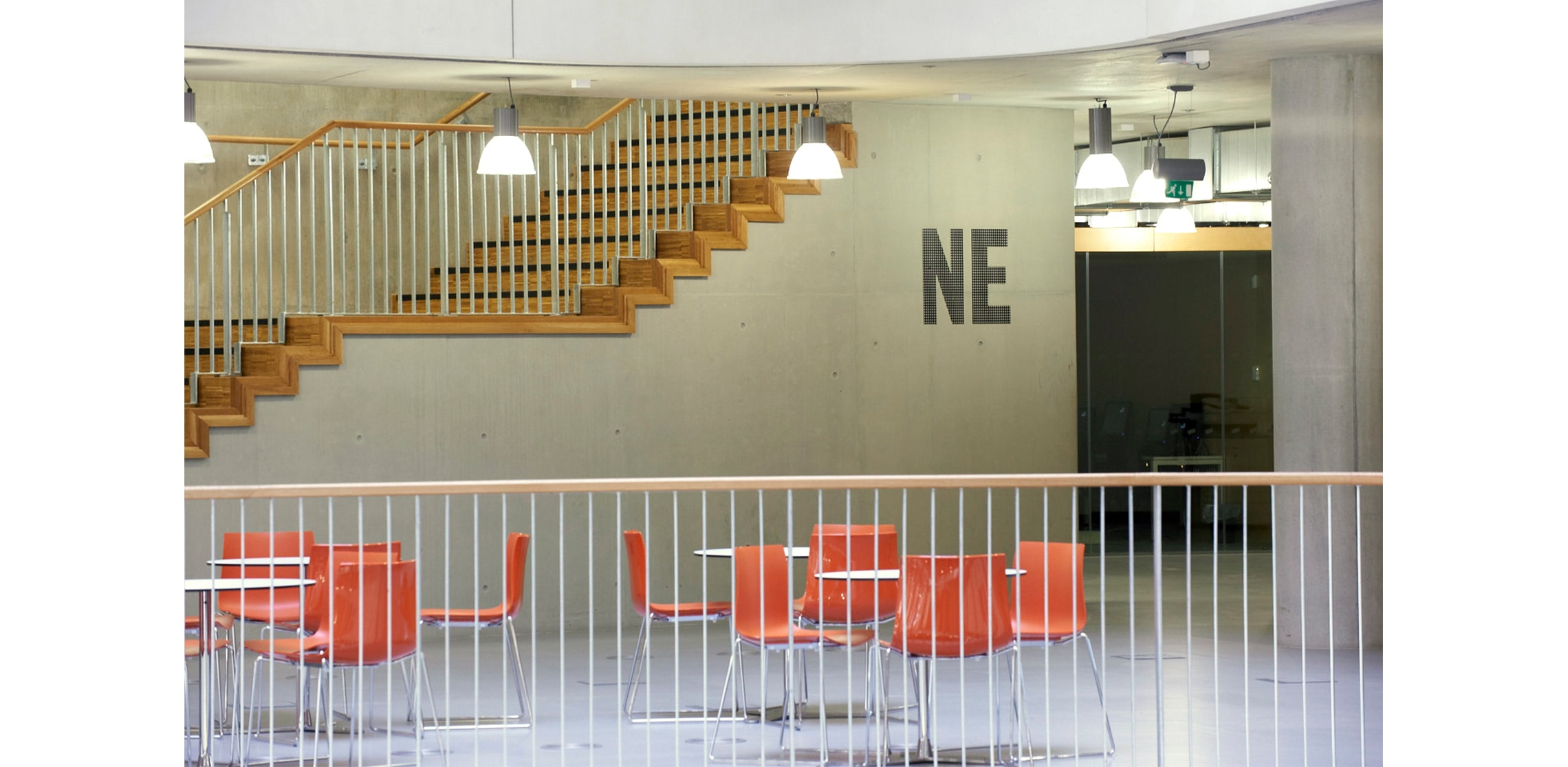
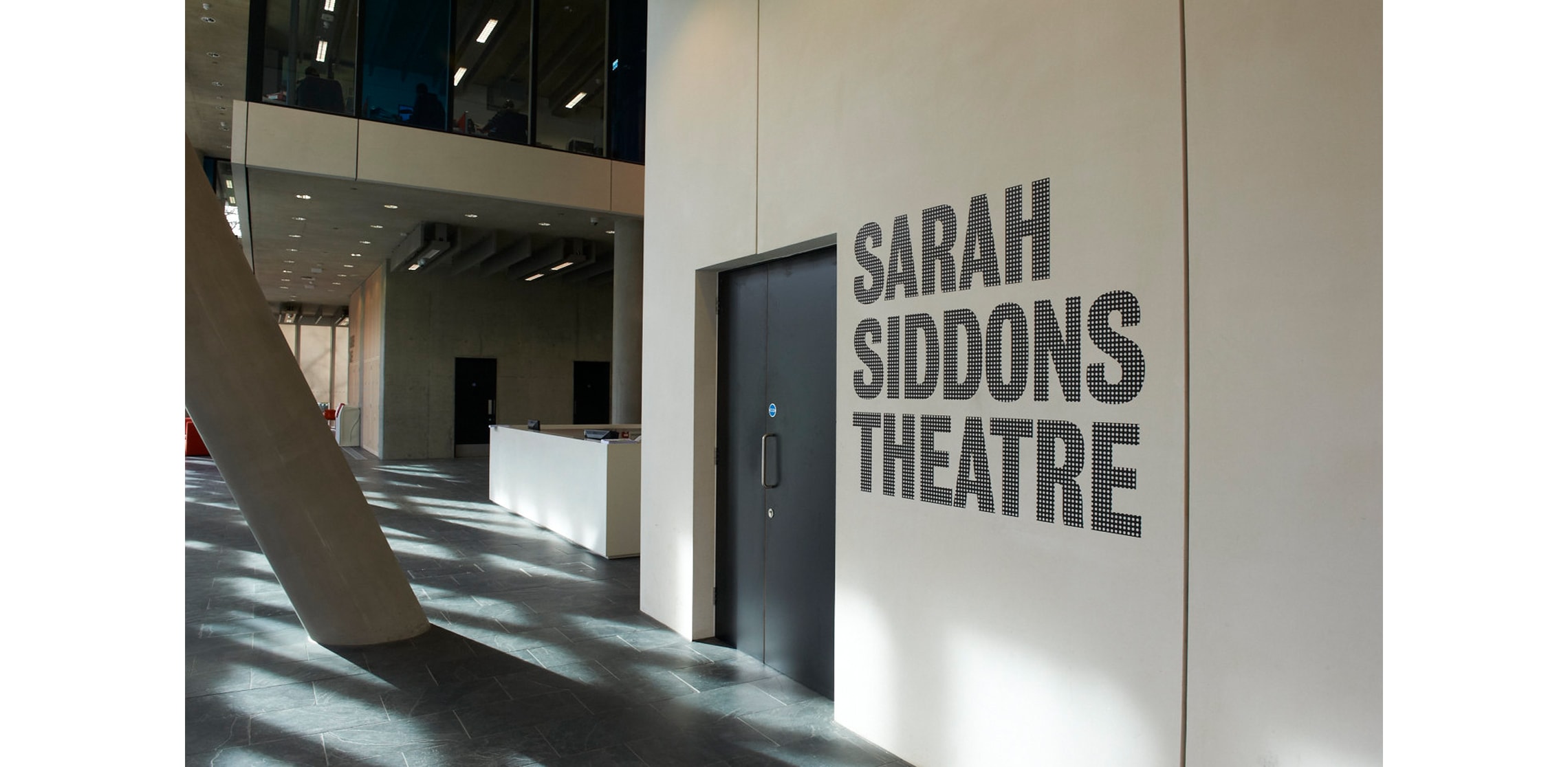
In a building this large, the wayfinding needed to be immediately useful and quickly learnable. We turned to one of London’s most familiar systems: the postcode. Dividing the building into four quadrants – NW, NE, SE and SW – created a structure that felt instinctively understandable. From there, the system breaks down into a simple hierarchy of floor number, city quarter and room, applied consistently across all levels despite the architectural variations.
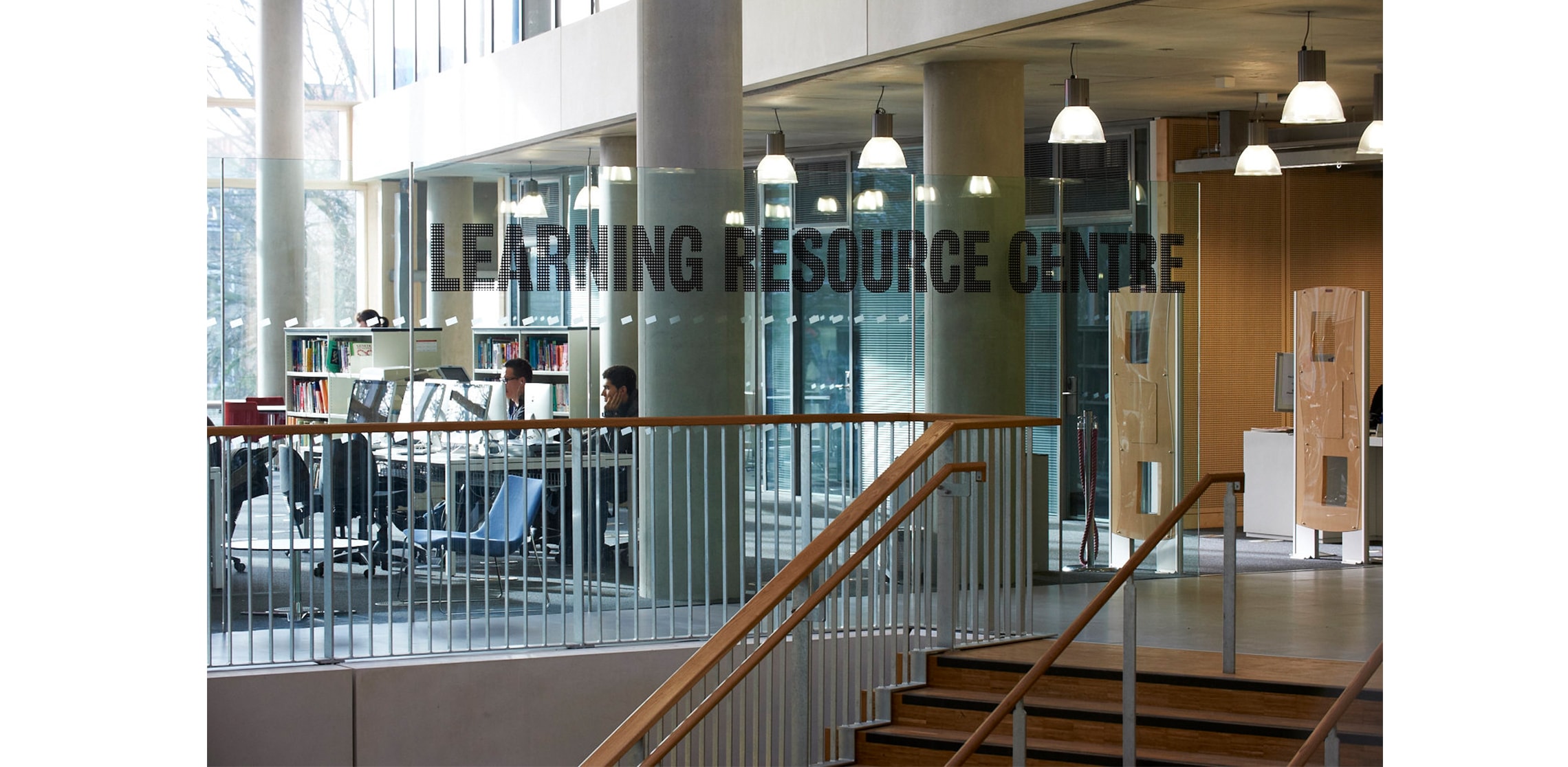
Materially, the wayfinding draws directly from the architecture. The atrium’s perforated plywood surfaces, designed for acoustic control, informed a graphic language that feels embedded within the building rather than applied to it.
Ultimately, the success of the system lies in how quietly it works. In a building of this scale and complexity, good wayfinding is less about announcing itself than allowing people to get on with what they came to do – learn, teach, meet, make, and occasionally find the café without asking directions three times along the way.