The Sheldon Tapestry is far more than a map. Woven in silk and wool in the 1580s, it captures Warwickshire with extraordinary richness – shimmering by candlelight, revealing everything from tiny woodland cottages to Warwick Castle, already five centuries old when the tapestry was created. The Rollright Stones appear in the earliest known depiction of a stone circle, while nearby Stratford-upon-Avon quietly marks the home of a young William Shakespeare.
At Whybrow, we have always loved maps. But what fascinates us most is how they reveal the relationship between people, place and time. The tapestry doesn’t simply show where things are – it tells the story of how a landscape has evolved. Rivers, castles, streets and settlements become layers of history, each helping people understand where they are and why it matters.
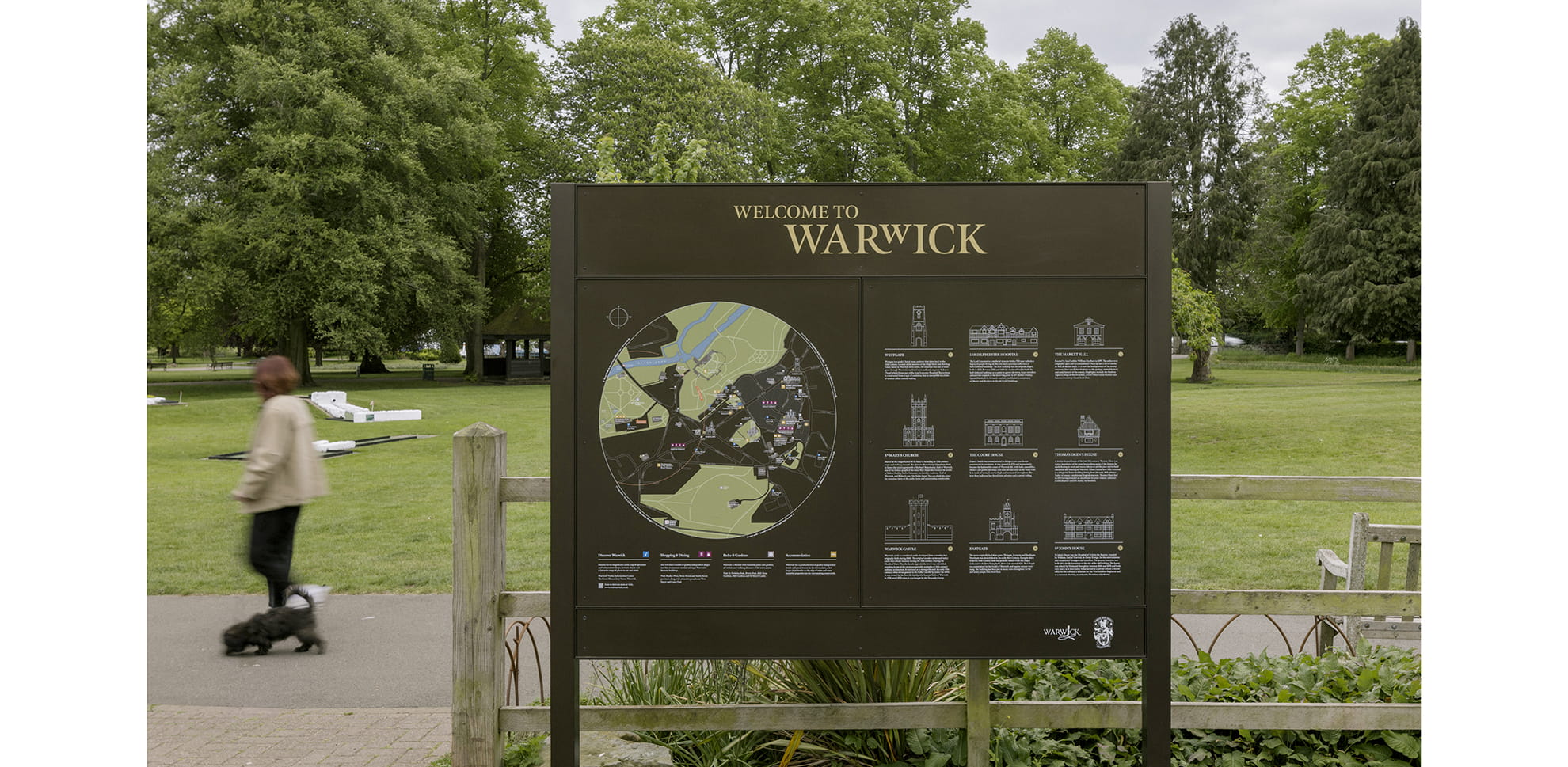
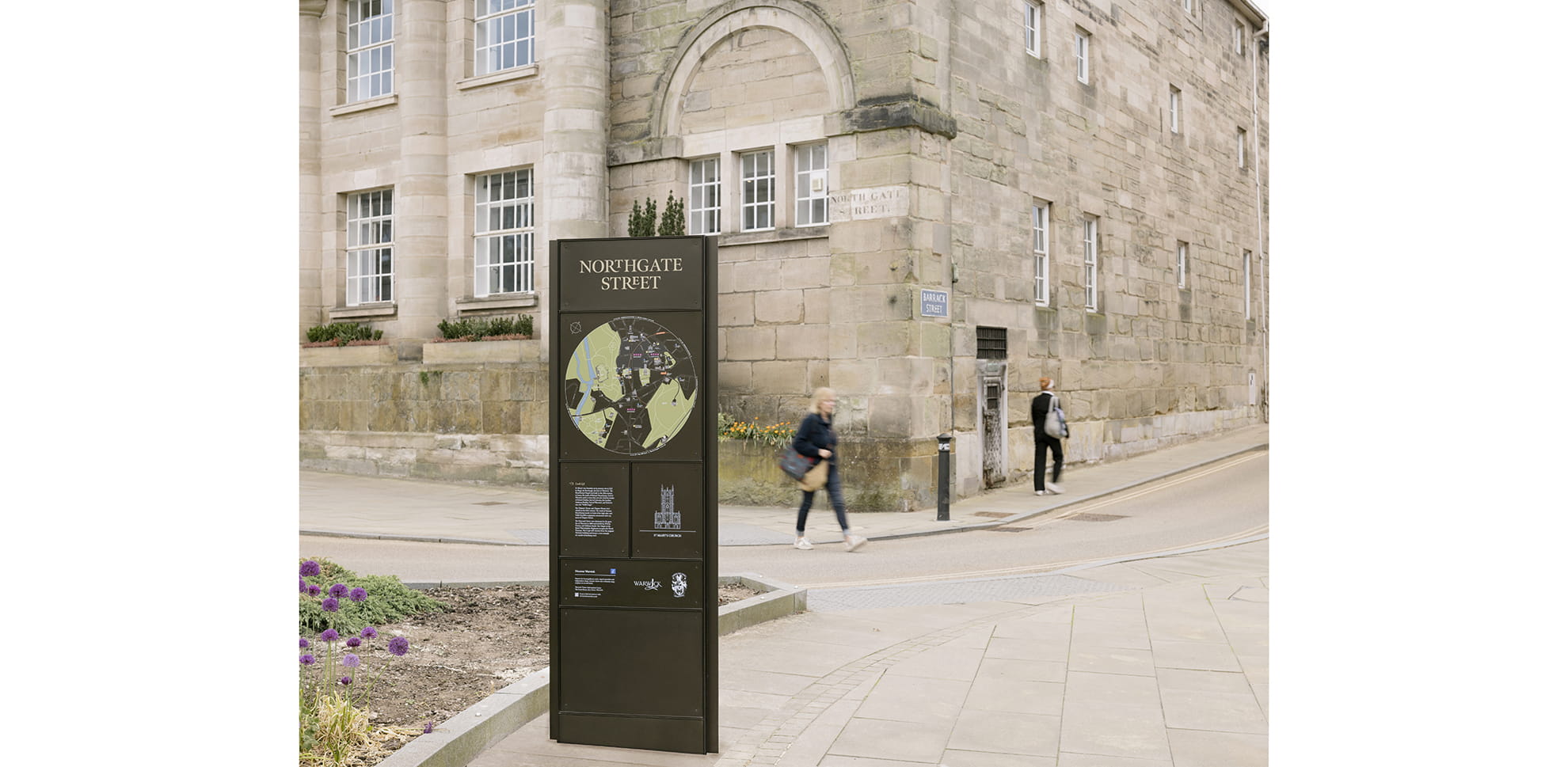
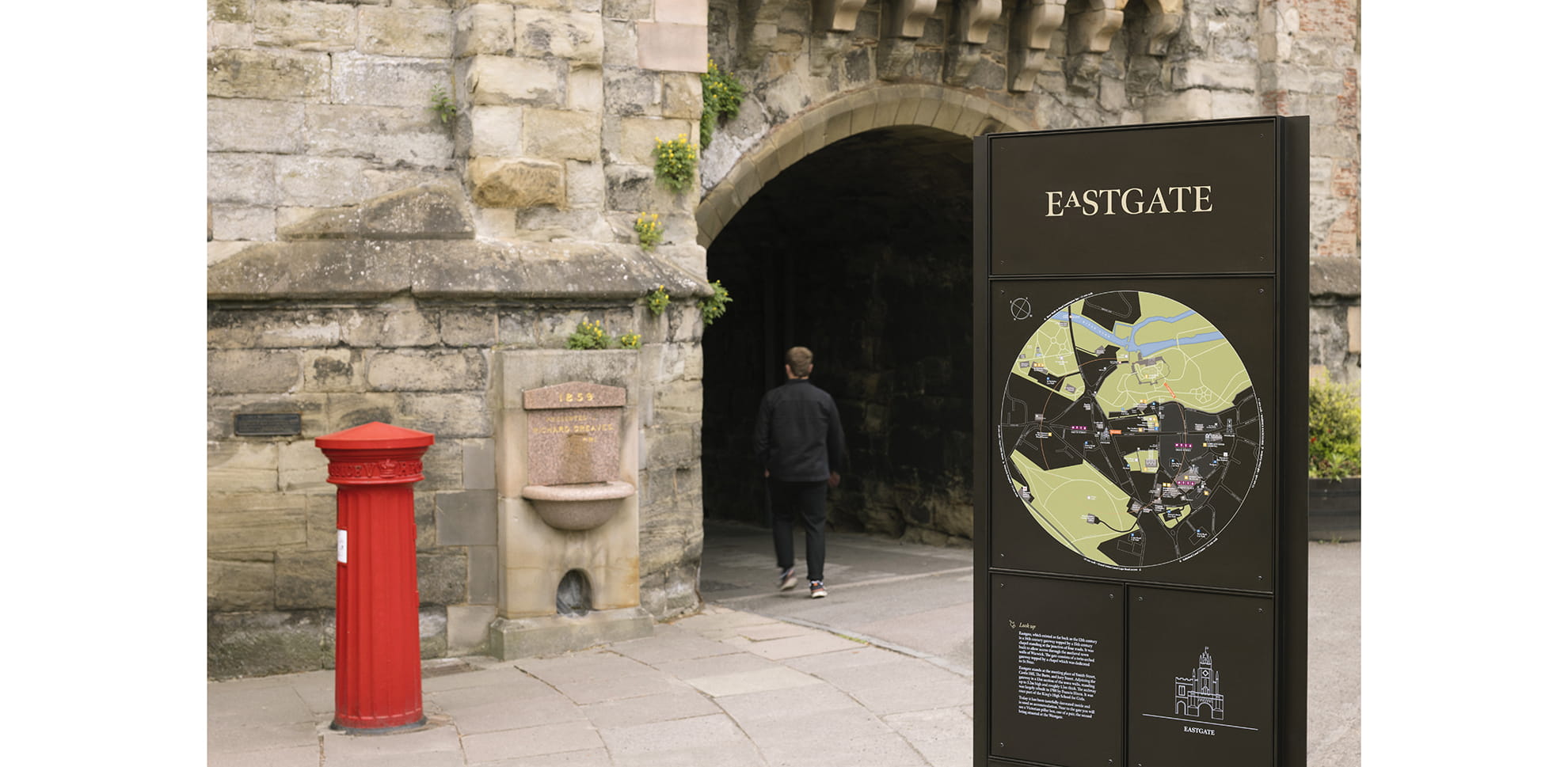
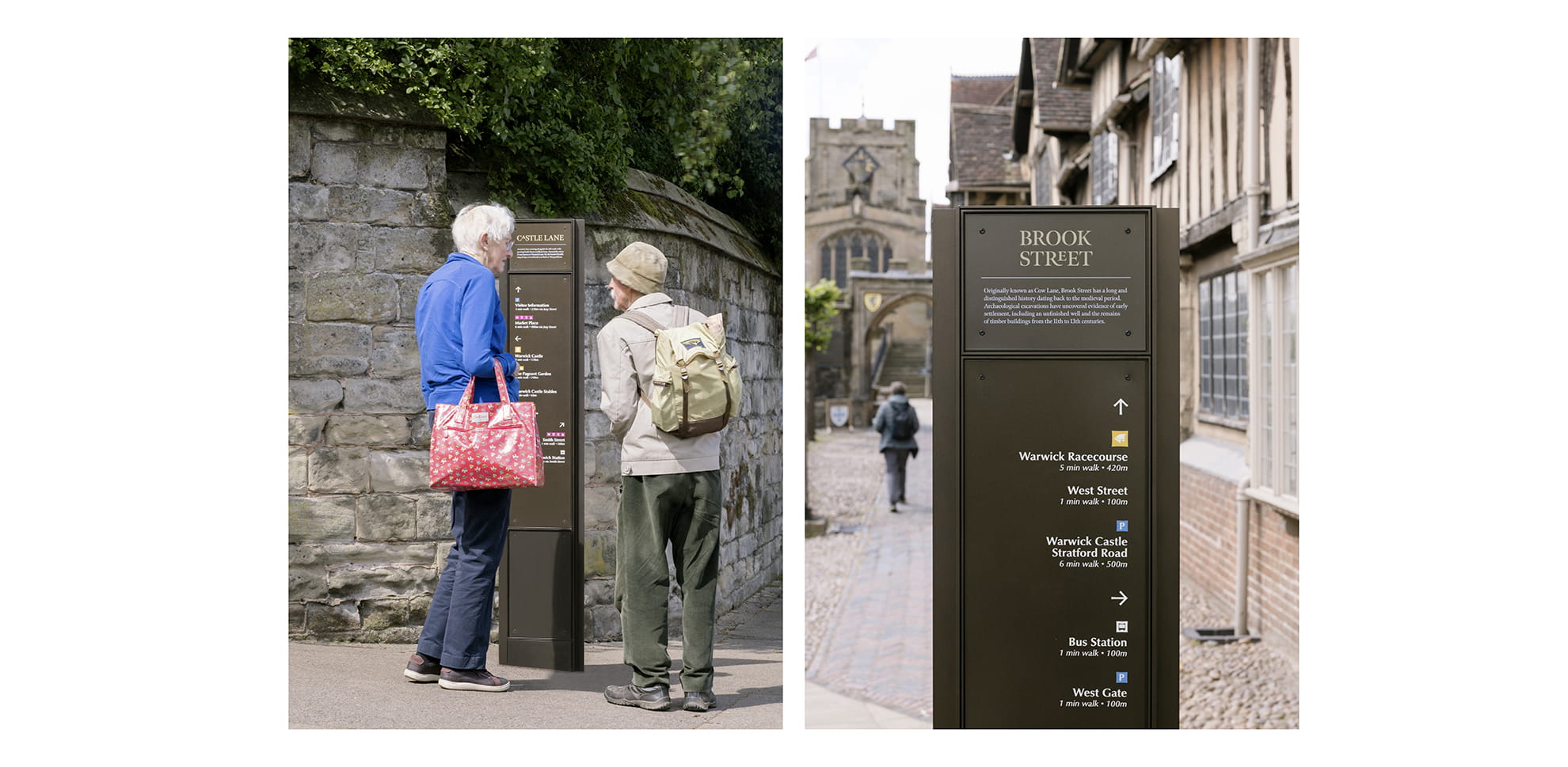
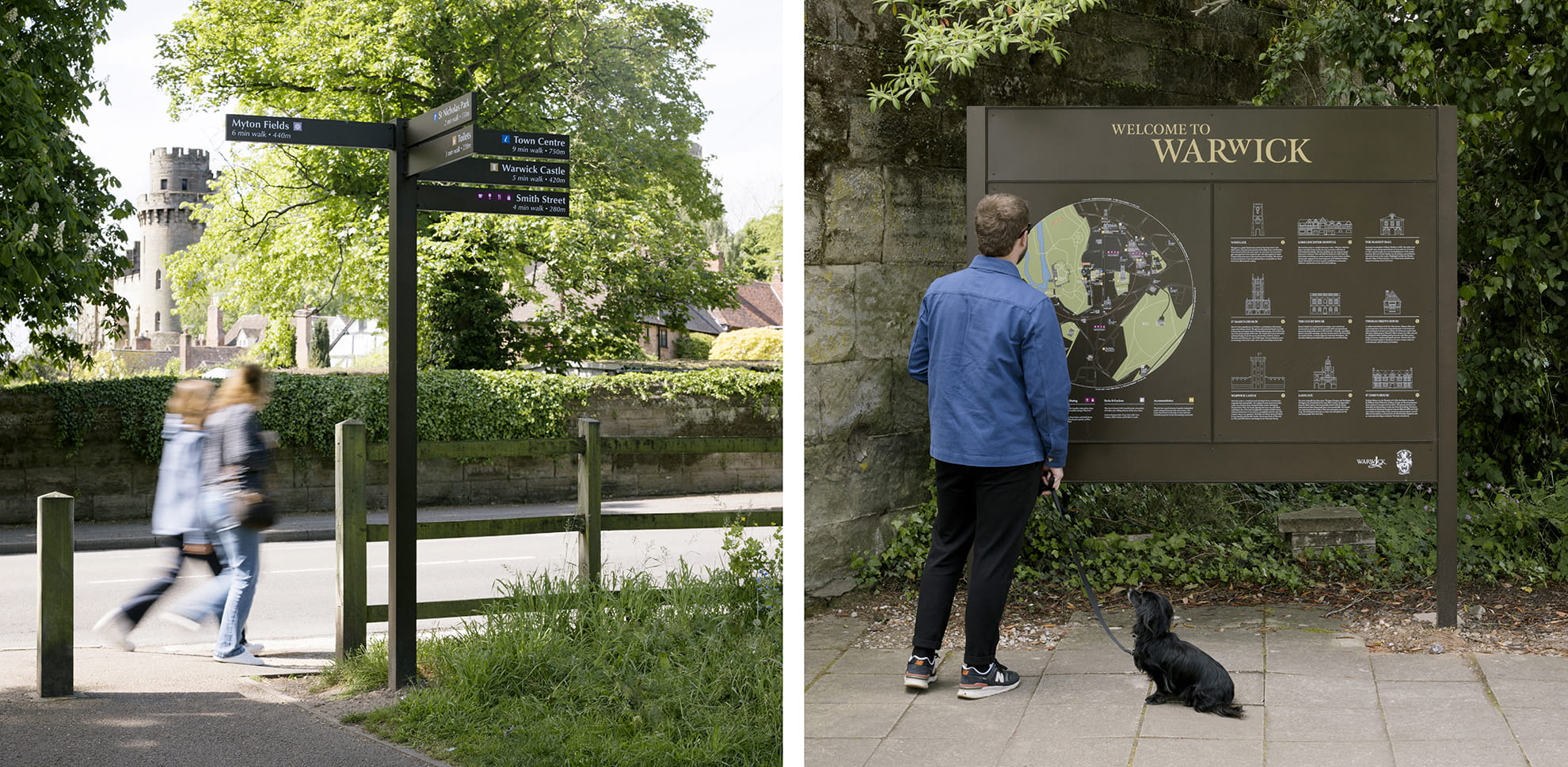
That same thinking shaped our approach to Warwick. Through our Time Agile Wayfinding™ methodology, we considered not only how visitors move, but how they spend their time. Moments of excitement at the castle become moments of discovery in the town. The journey itself becomes part of the experience.
With Warwick Castle attracting hundreds of thousands of visitors each year – and an increasing number staying overnight – helping people naturally continue their visit beyond the castle walls is vital to the town’s independent businesses and long-term prosperity.
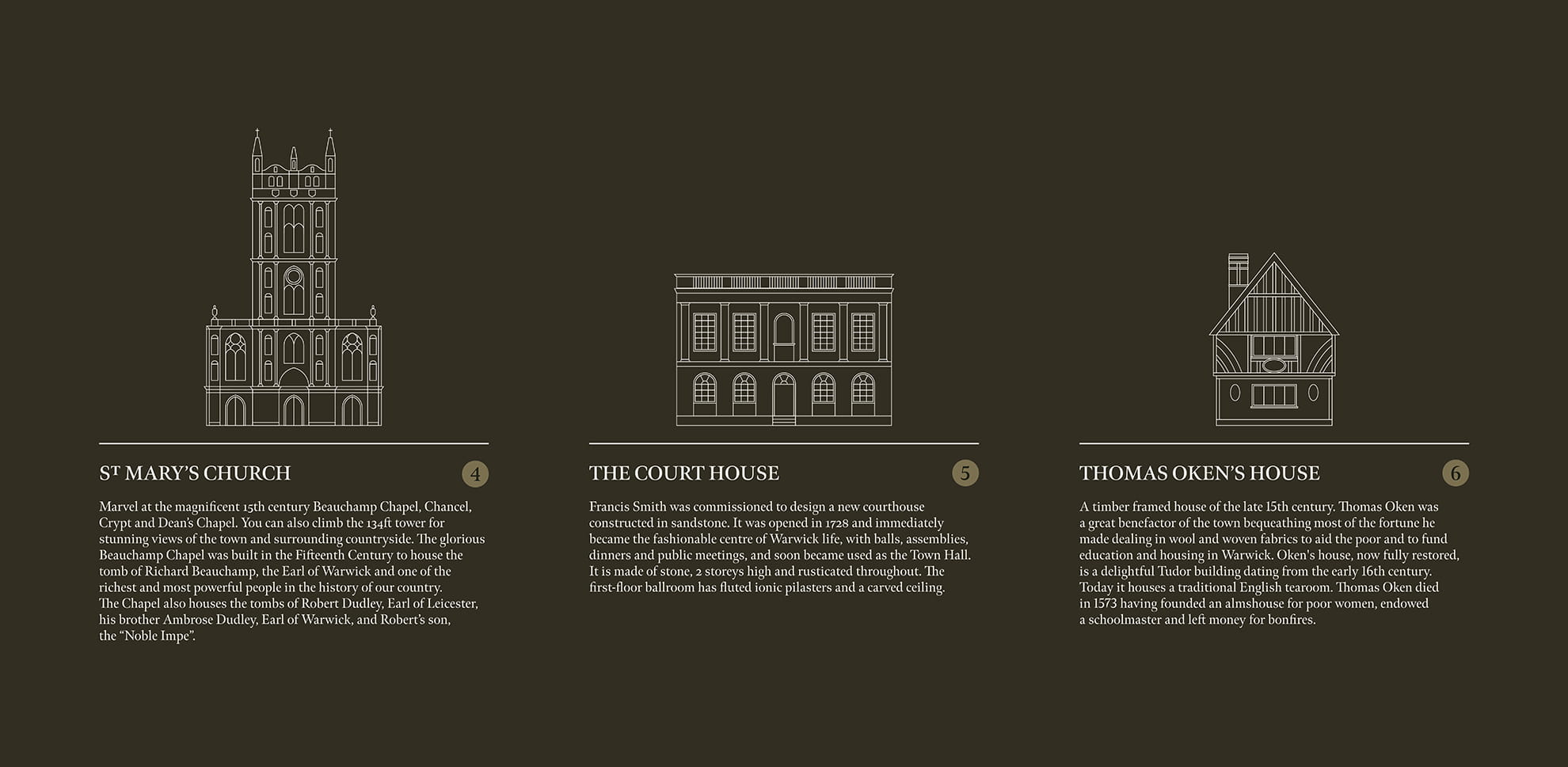
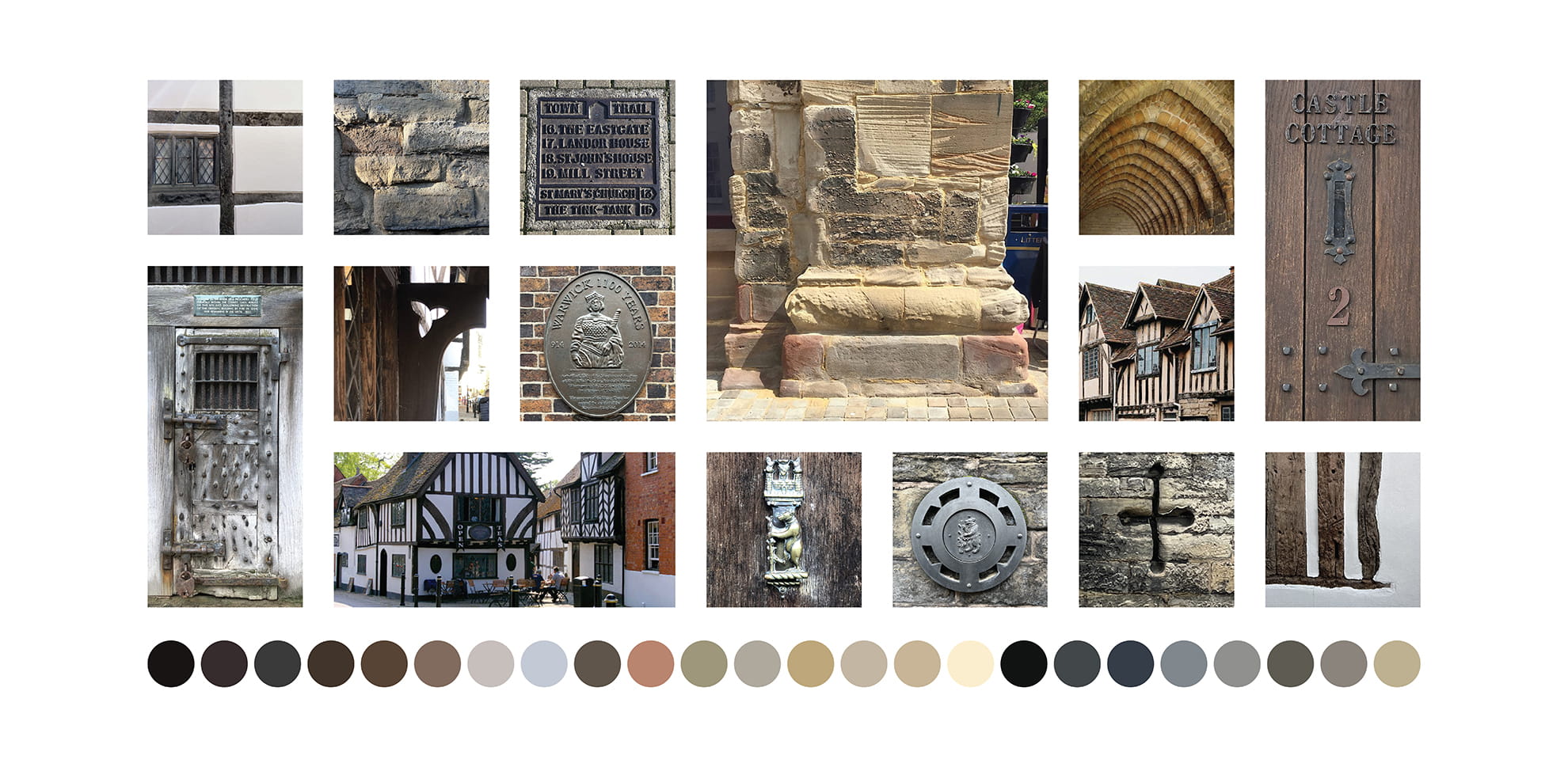
Drawing inspiration from the Sheldon Tapestry, Warwick’s Georgian palette, historic ironwork and letterforms carved into centuries-old stone, we created a wayfinding system that feels as though it belongs. Rather than interrupting the experience, it quietly extends it, encouraging visitors to wander, pause, explore and uncover more of Warwick’s story.
When people feel connected to a place, they stay longer. They discover more, spend more and leave with memories rather than directions.
That’s what great wayfinding can do. It doesn’t simply help people find their way – it helps them make the most of their time.