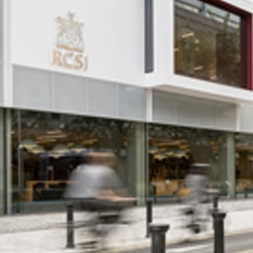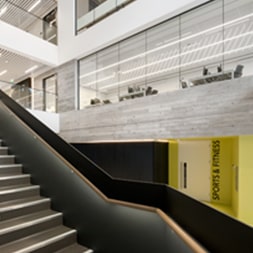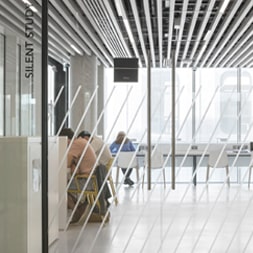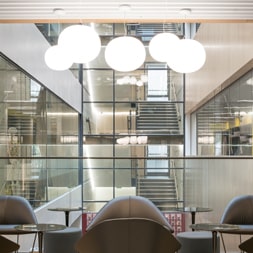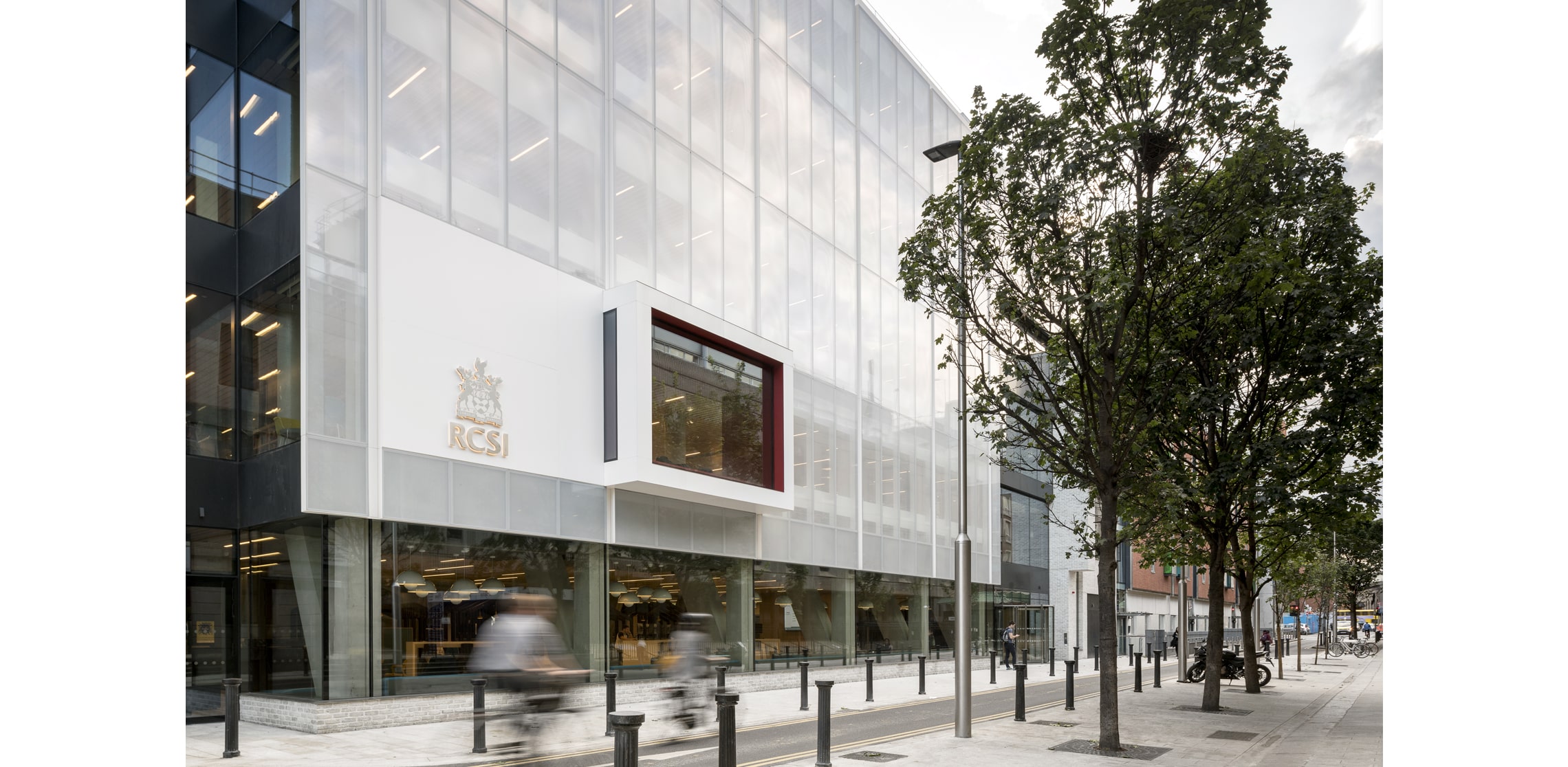
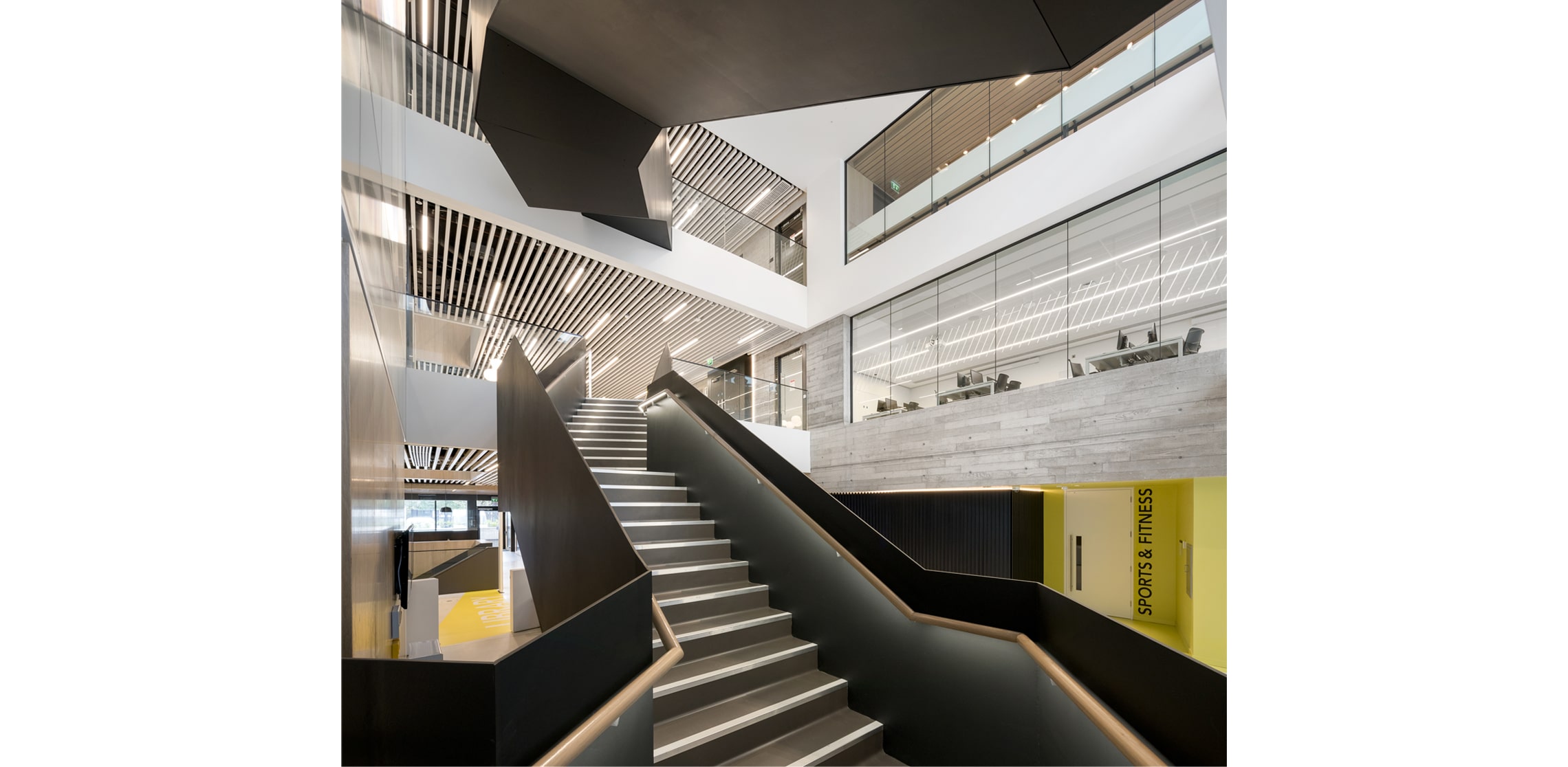
At the Royal College of Surgeons Ireland’s award-winning York Street site in Dublin, movement through the building is not an afterthought but a defining experience. An artery-like staircase rises through the central atrium – part circulation, part spatial anchor – threading its way through what is, in plan, a notably compact footprint. In less careful hands this could easily have felt dense, even overwhelming, but Henry J Lyons architects have orchestrated the space with a precision that keeps everything legible, open and unexpectedly calm.
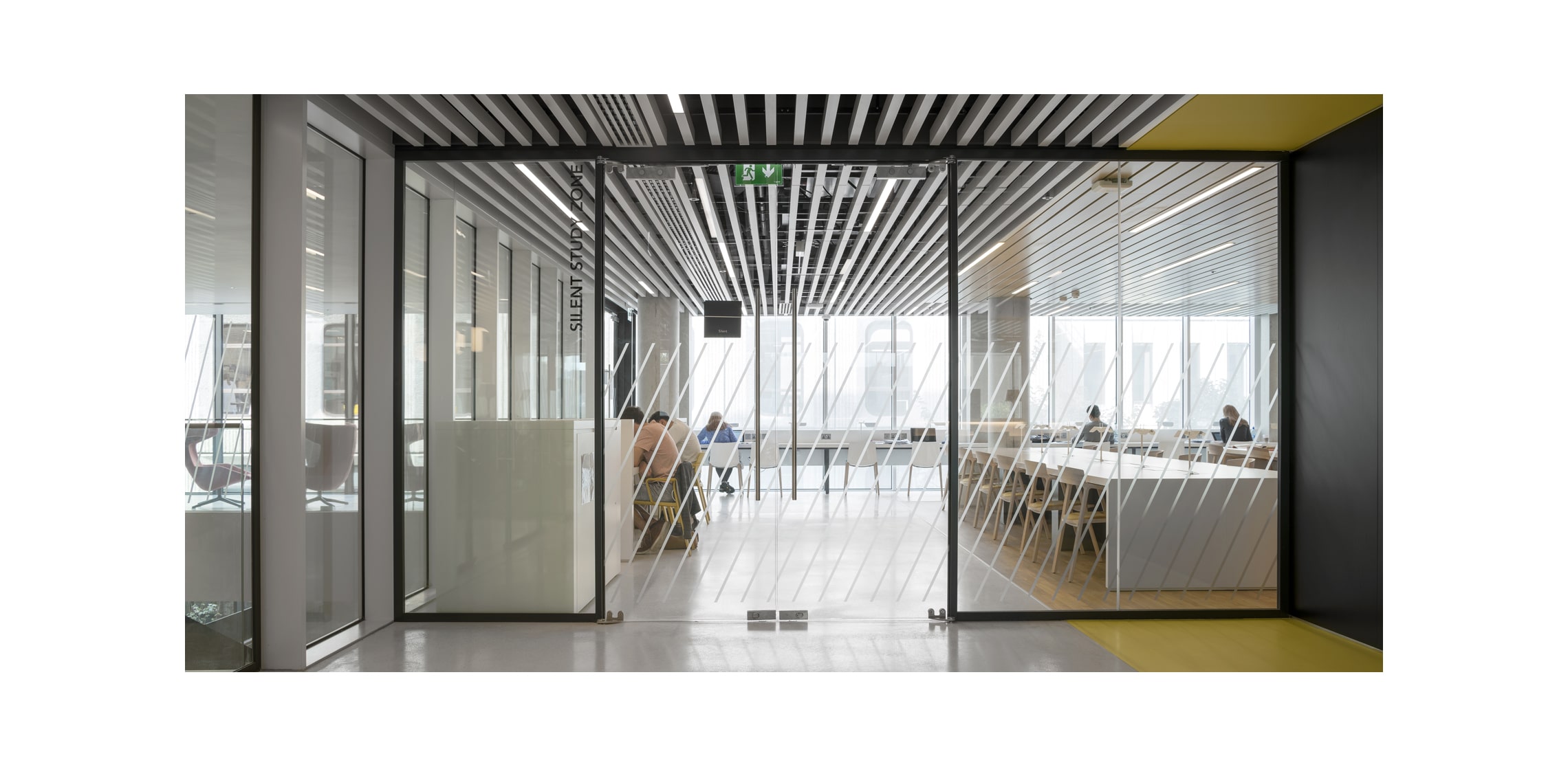
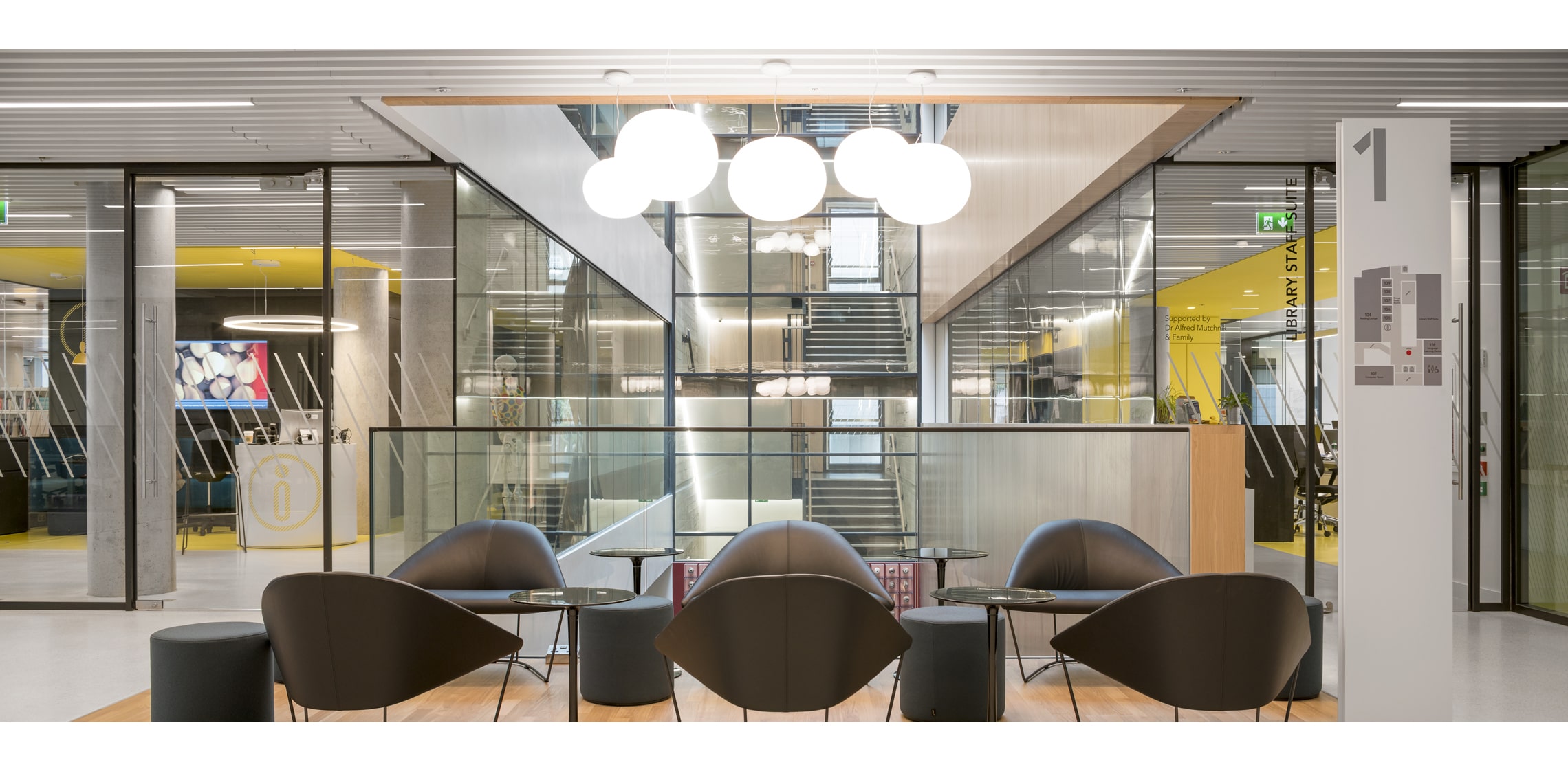
The circular stair (something of a scenic route, if one has a moment to spare) offers glimpses across and up through the building, its formed steel balustrade framing views of the floors above. It is both a physical connector and a visual one, encouraging a natural understanding of how the building is organised. This is reinforced by the architects’ careful specification of glass and cellular screens, creating a sense of permeability: light moves freely, sightlines are maintained, and the atmosphere remains transparent rather than enclosed. In such an environment, orientation begins almost instinctively.
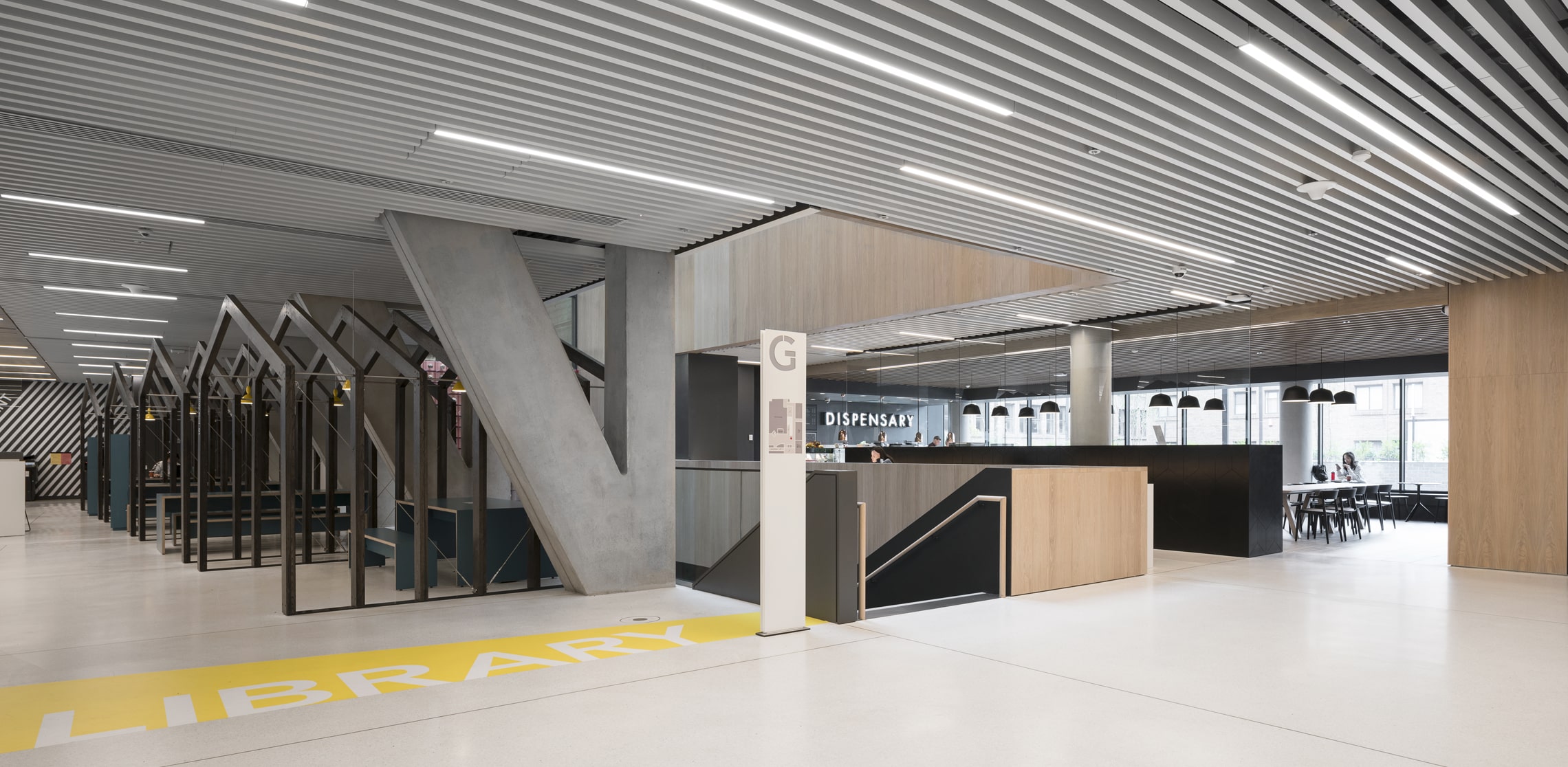
Our wayfinding builds directly on this architectural clarity, an approach that understands navigation not as a fixed layer of instruction, but as something that unfolds progressively in time, in step with the visitor’s journey. In a building of this scale and complexity, that means giving just enough information, precisely when it becomes useful, allowing the space itself to do as much of the work as possible.
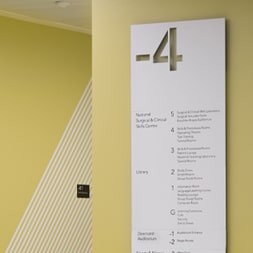
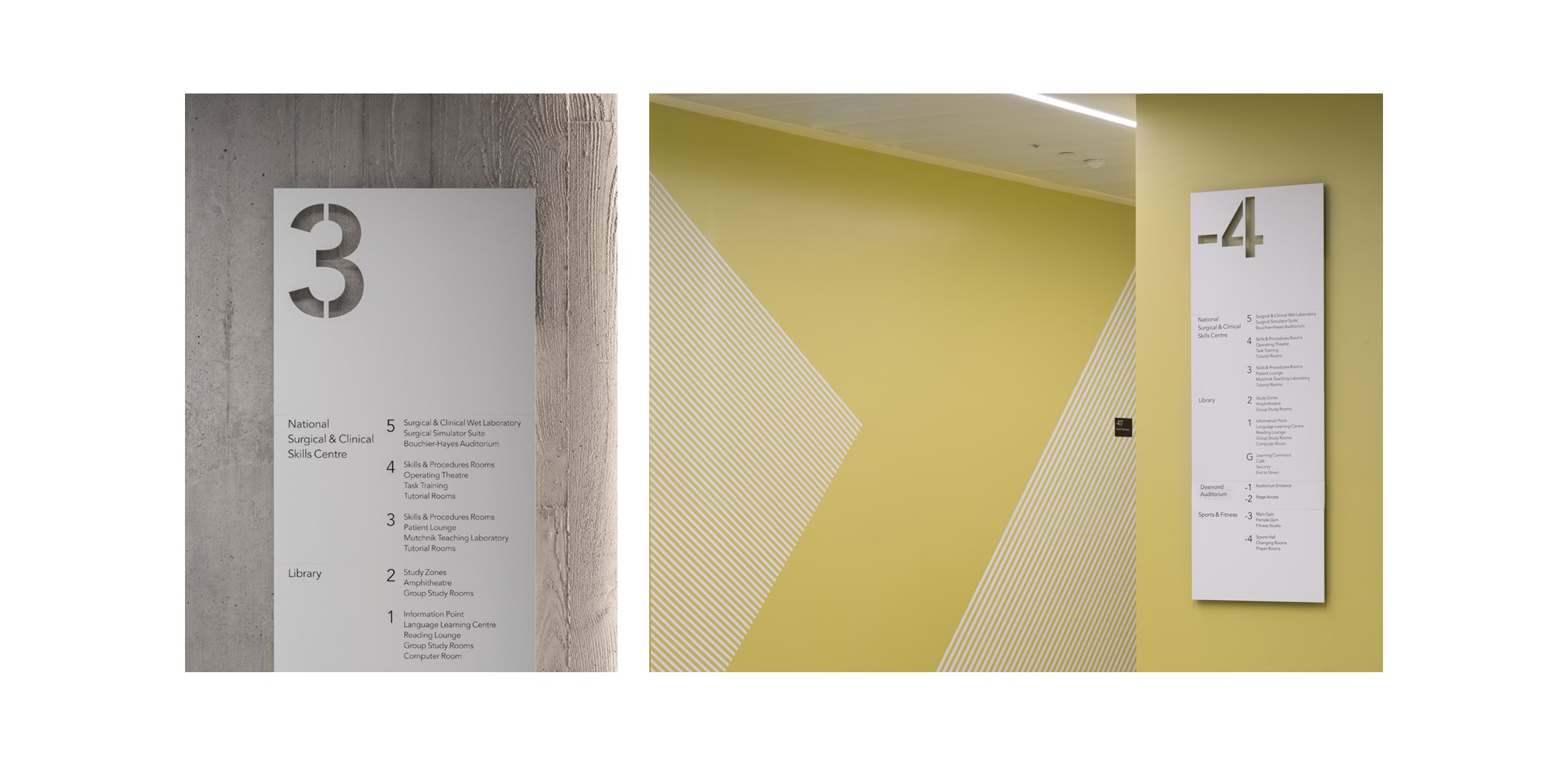
Totems positioned at the main bank of passenger lifts present simple, ‘heads up’ diagrams of each floor, enabling visitors to quickly locate themselves and their destination before moving on. These moments of orientation are deliberately concise, reducing cognitive load and supporting confident decision-making at key points. Elsewhere, the system recedes, allowing movement to feel intuitive rather than managed.
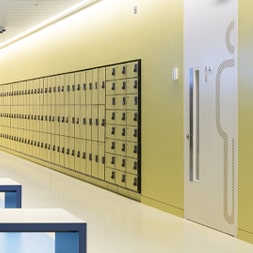
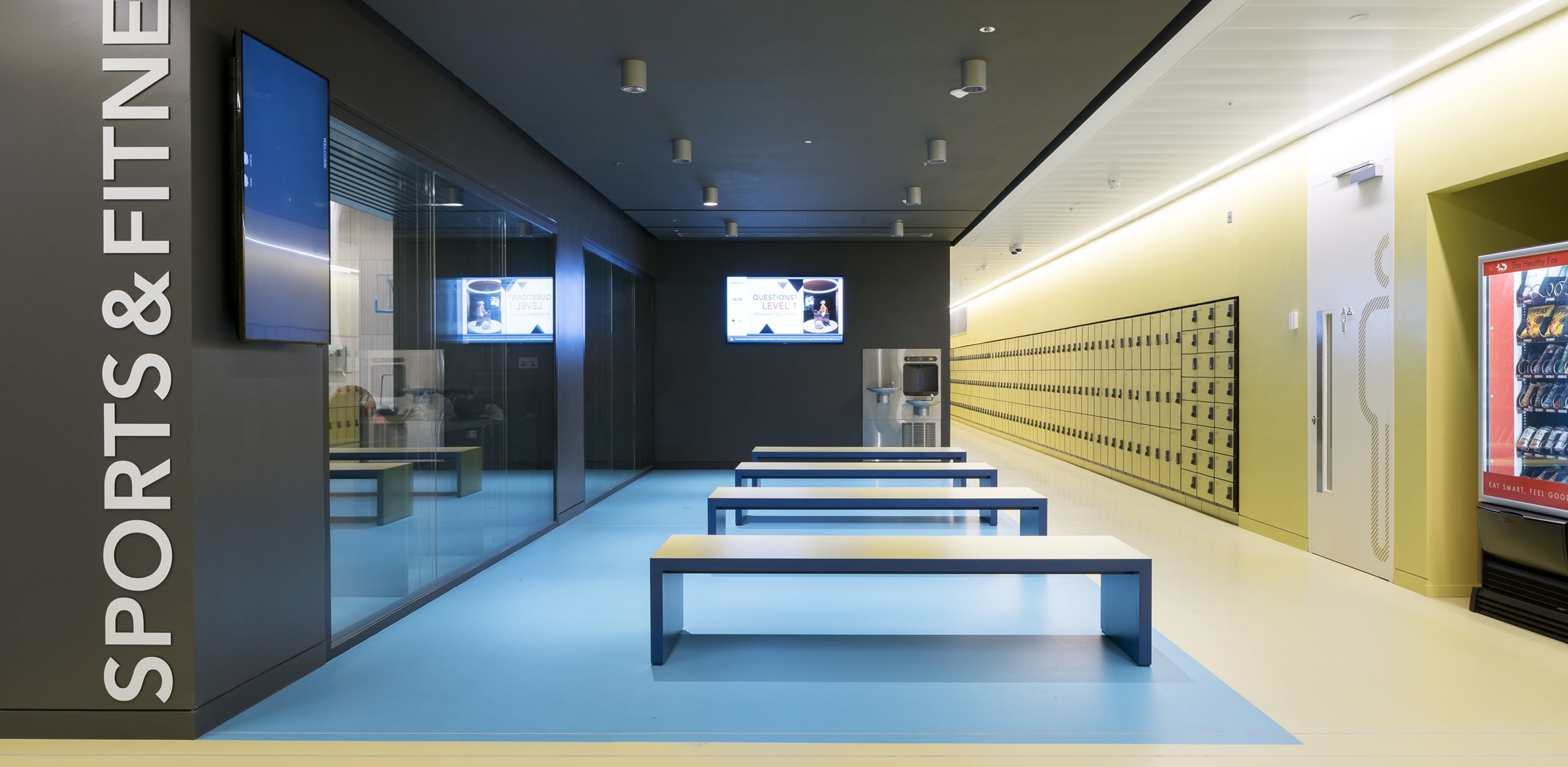
Materially and visually, the signage is deliberately restrained, drawing from the building’s neutral palette so that it sits comfortably within its context.
Floor numbers are rendered using a cut-out, stencilled approach, allowing the textured concrete beneath to show through: less applied graphic, more revealed surface. It is a small but telling detail, reinforcing the idea that wayfinding is embedded within the architecture, not layered on top of it.
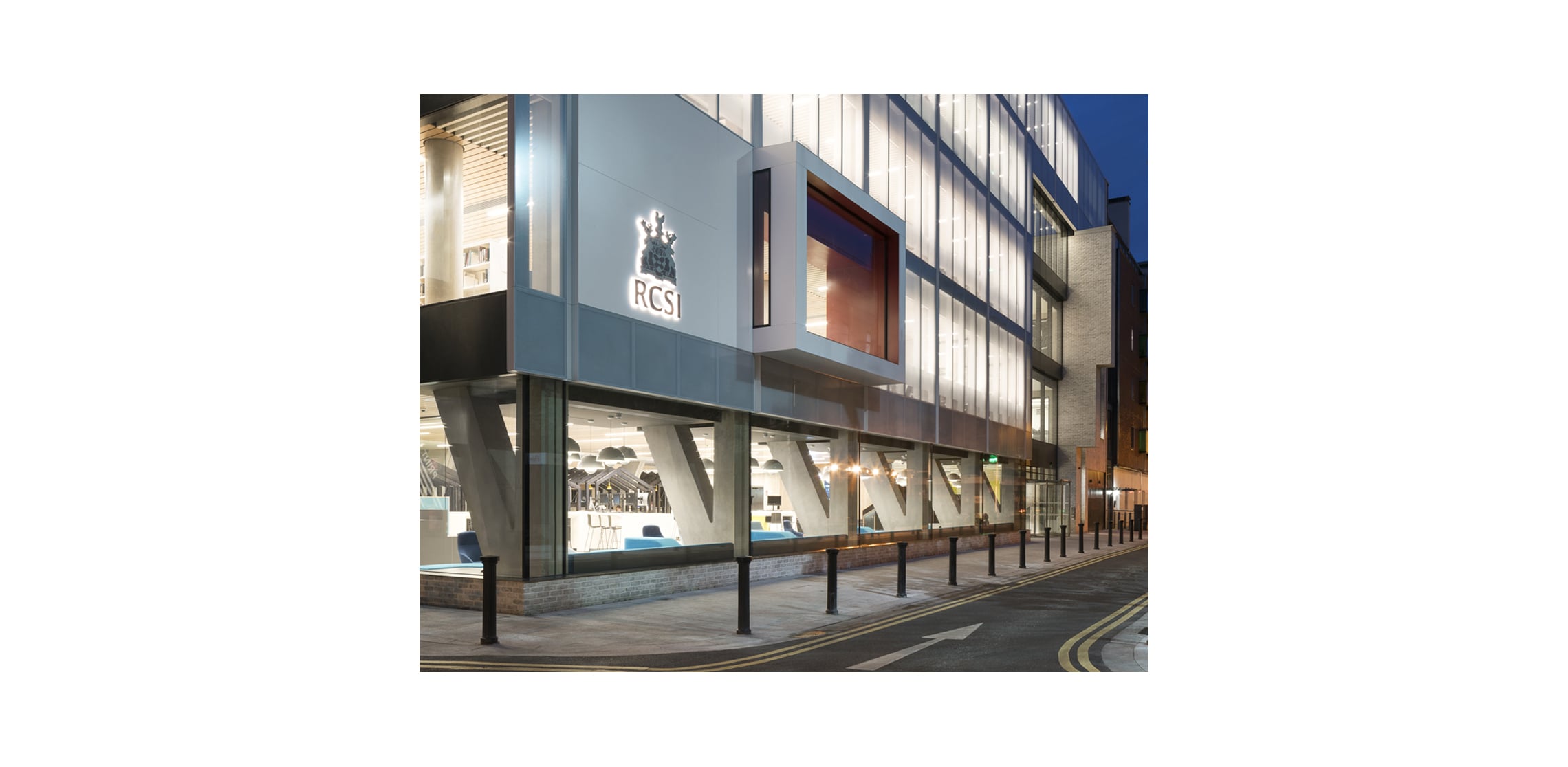
And while the experience of moving through the space feels intuitive, the scale of it is anything but modest. The building extends to six floors above ground and four below, housing state-of-the-art medical training facilities, including a first-in-Europe Simulation Department. Here, students are immersed in scenarios designed to replicate the emotional and practical realities of clinical practice – learning skills that are, quite literally, life-changing and life-preserving.
In this context, clarity is not simply desirable, it is essential. The building supports complex, high-stakes activity, and the wayfinding reflects that responsibility: calm, precise and dependable. It reveals itself only as needed – guiding movement with quiet assurance, and allowing the architecture, and the purpose it serves, to remain firmly in the foreground.