The British Library was designed by husband-and-wife architects Colin St John (Sandy) Wilson and MJ Long – which feels right. If you’re going to build the largest public building project in the UK in the 20th century, you need someone who understands both scale and negotiation over dinner.
When it opened in 1978, it gathered together reading rooms and collections that had been scattered across London and brought them home to the old Somers Town rail depot site beside St Pancras. It was an act of consolidation. Of belief. A brick-built declaration that knowledge deserved presence.
Wilson said, “It is the essence of the Library to grow.” And grow it has.
Today it welcomes more than 1.5 million visitors a year. Researchers bent over manuscripts. Teenagers discovering the exhibition space. Tourists who came for the Magna Carta and stayed for the café. It is, undeniably, one of the world’s greatest centres of knowledge.
And yet…
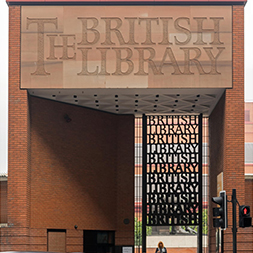
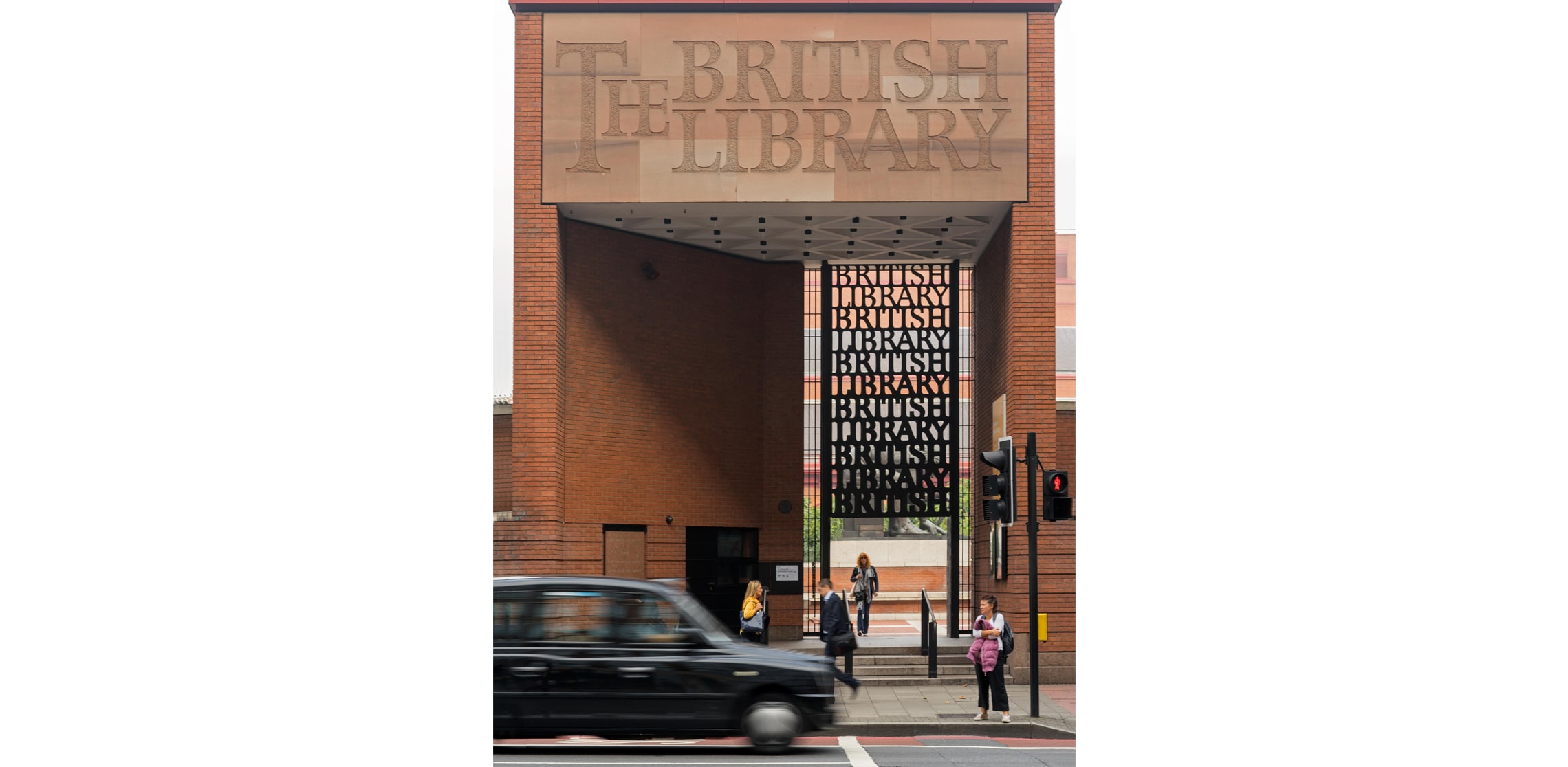
For all its confidence, it wasn’t entirely confident from the street. On Euston Road – that roar of buses, taxis and urgency – the Library could feel oddly quiet. Not invisible, exactly. Just… understated.
And there is a difference between dignity and disappearance.
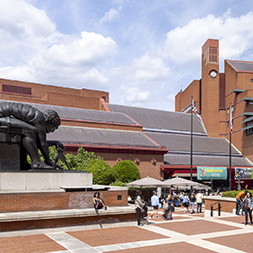
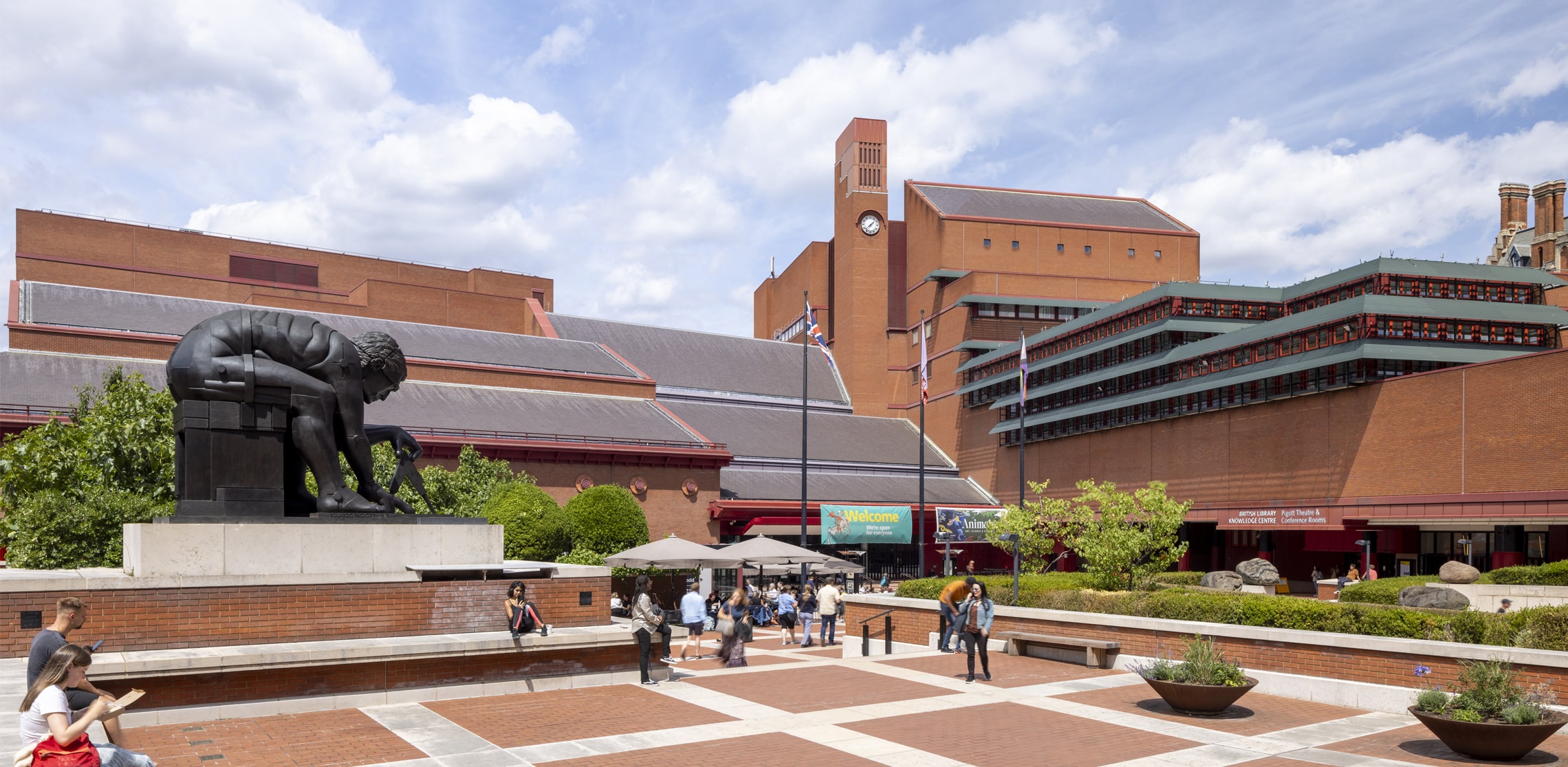
Legibility had been a concern from the outset. The site is wedge-shaped, narrowing towards its ornate gated entrance. A generous piazza stretches out front – a planning requirement in the original scheme – open, civic, democratic. It’s a space designed to breathe.
But what people are designed to do is fascinating.
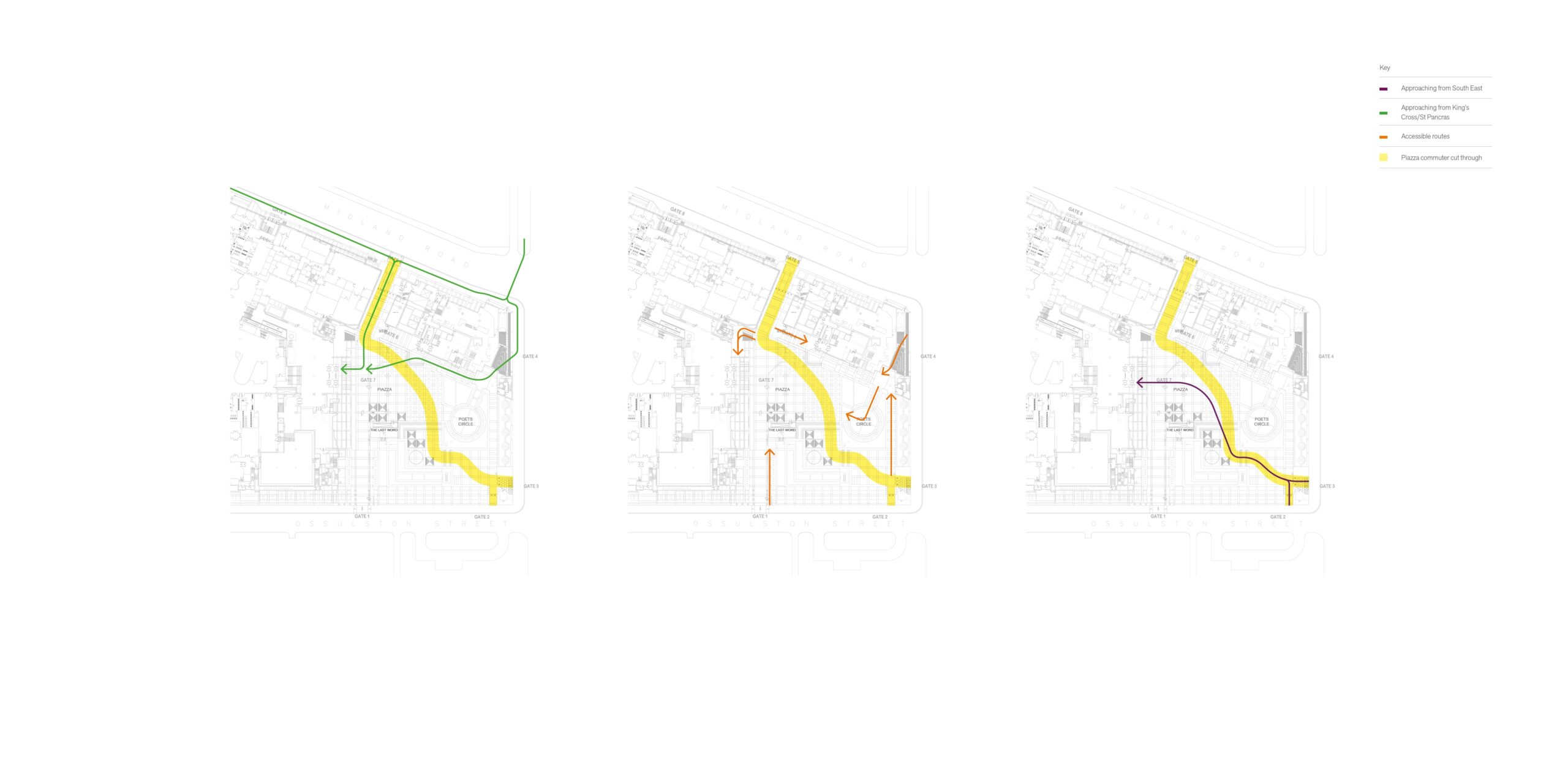
We commissioned Dr Andrew Barker, an ethnographic specialist, to observe how the space was actually being used. Not the architectural intention, the human behaviour.
What he found was beautifully simple.
The grand stepped entrance on Euston Road – the one that looks as though it should be the obvious route – was underused. It requires effort, you climb, you commit. And at the top? No dramatic reveal. No glimpse of something magnificent. Just sky. And human beings, bless us, like a reward. We like to see what we’re heading towards. Whether it’s a croissant, a view, or the promise of intellectual revelation, we want a hint of payoff before we invest our energy.
So people drifted to secondary entrances off the piazza. Or they used the piazza as a shortcut to St Pancras. Or as a meeting place. Or as somewhere to sit and think – which, in fairness, is entirely on brand for a library.
The space worked, but it lacked clarity.
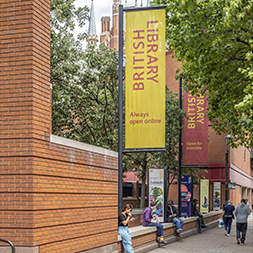
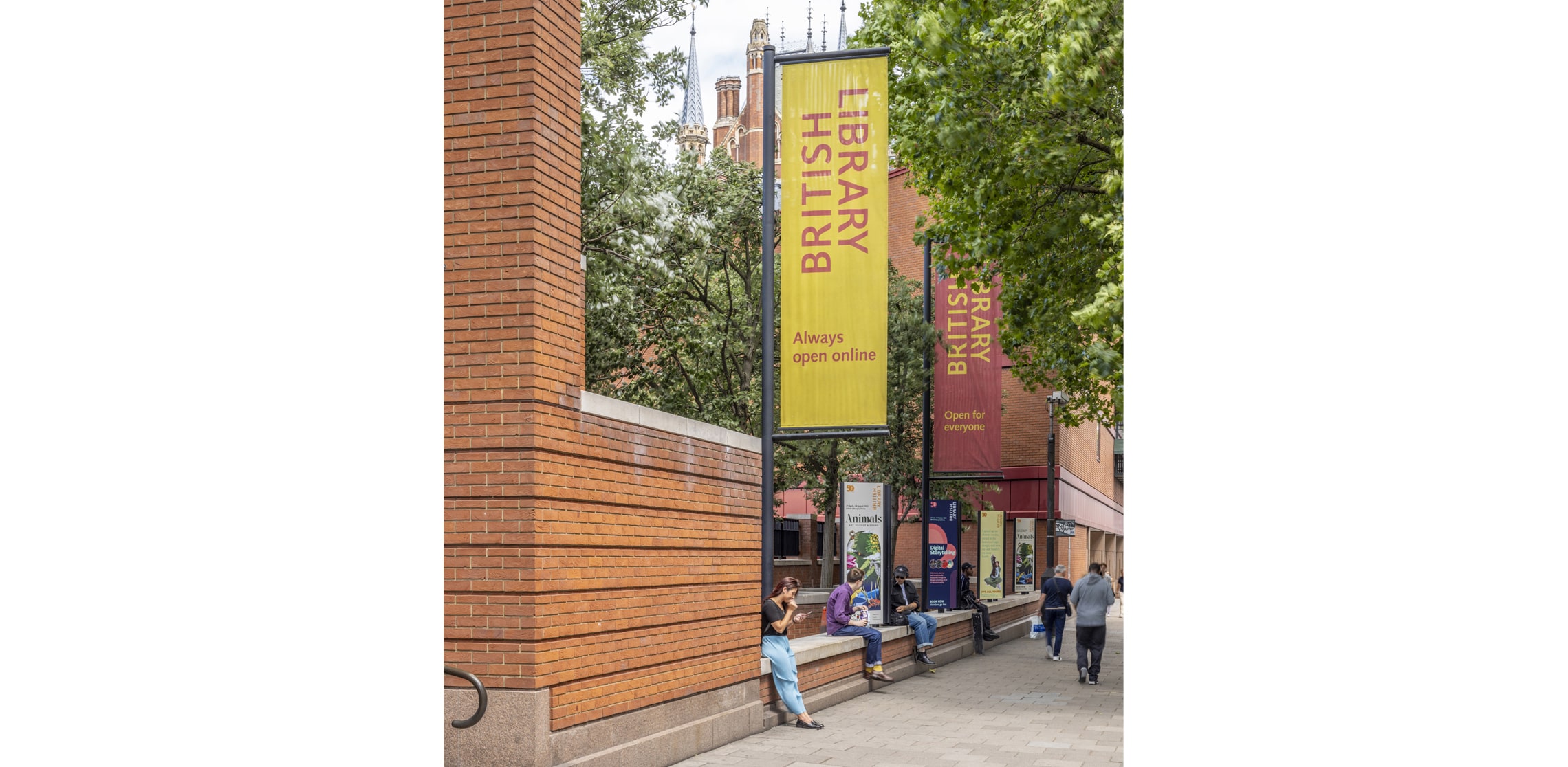
We studied the streetscape, the sightlines, the rhythm of Euston Road. We repurposed existing high-level banner sites so the Library could be read clearly from a distance.
At low level, we dedicated information panels to exhibitions and events – because exhibitions are a vital part of the Library’s public life, and passers-by deserve an invitation before they’ve even set foot inside.
The piazza itself didn’t need embellishment. It needed editing. A decluttering.
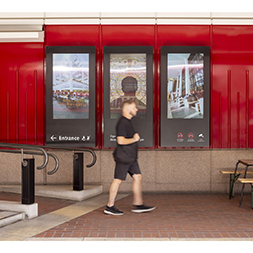
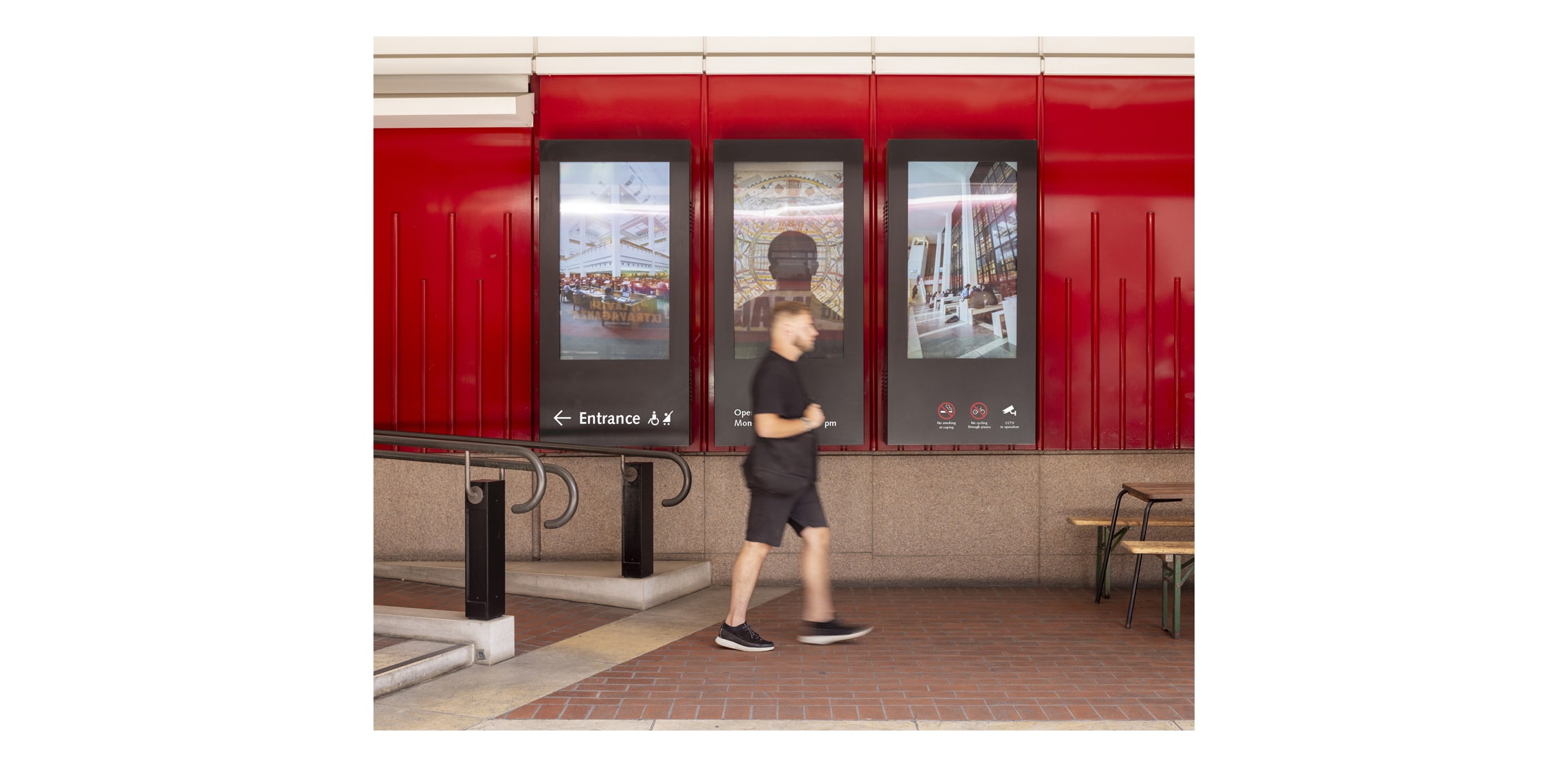
We also introduced digital displays at an underused entrance off Euston Road, transforming it into something unmistakably inviting. What had felt peripheral now signals purpose, a doorway that says: come in.
The British Library stands as a symbol of the importance of all libraries – it does not need embellishment to be powerful. But sometimes, even greatness benefits from being clearly seen.